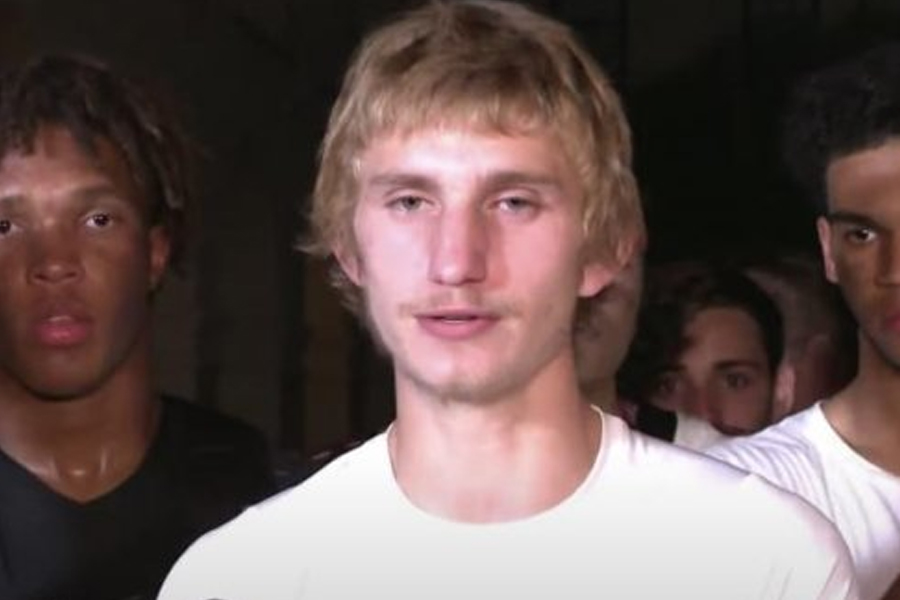
Who Is Elijah Storm Warner
Elijah Storm Warner, widely known as E.J. Warner or EJ Warner, is an American football quarterback recognized for his passing ability, competitive spirit, and connection to one of the most celebrated families in professional football. Born on November 3, 2003, he grew up in the Phoenix, Arizona, area, surrounded by a family that valued faith, perseverance, and athletic achievement.
As the youngest son of Pro Football Hall of Fame quarterback Kurt Warner and his wife, Brenda Warner, Elijah inherited a strong football tradition. Yet his journey has never been simply about carrying a famous surname. He has worked to establish his own identity through high school competition, college football, and the challenges of adapting to different teams and offensive systems.
What makes Elijah’s story interesting to me is the combination of opportunity and adversity. He grew up with access to an experienced football mentor at home, but he also faced injuries, demanding expectations, and the pressure that naturally follows a legendary father’s footsteps.
His approach to quarterbacking reflects many of the principles associated with Kurt Warner. He values preparation, quick mental processing, accuracy, and the ability to recognize defensive movements before making a decision. Rather than relying entirely on physical strength or athleticism, he emphasizes the mental side of the game.
Elijah’s journey demonstrates that football development is rarely a straight line. It requires patience, adaptability, and the willingness to learn from every season.
Early Life and Childhood in Arizona
Elijah spent his childhood in the Phoenix metropolitan area, where football was an important part of family life. His father’s remarkable career provided an unusual perspective on the sport. Kurt Warner had risen from an overlooked college prospect and grocery store worker to become a Super Bowl champion and one of the NFL’s most recognizable quarterbacks.
That journey offered Elijah a powerful example of perseverance. Success was not presented as something guaranteed by talent or circumstances. It was something earned through preparation, resilience, and consistent effort.
Growing up in a household with several siblings also meant that Elijah experienced life beyond football. Family gatherings, shared celebrations, faith, and philanthropy formed part of the environment in which he developed.
His parents encouraged their children to pursue individual interests while maintaining a strong sense of responsibility toward one another. Football was important, but character mattered just as much.
Elijah attended Desert Mountain High School before transferring to Brophy College Preparatory in Phoenix. His development accelerated at Brophy, where his father served as a quarterbacks coach and helped him refine his understanding of the position.
The relationship between father and son created a distinctive learning environment. Kurt could explain defensive reads, footwork, passing mechanics, and game preparation from firsthand experience. At the same time, Elijah had to prove himself on the field rather than depend on his family name.
High School Football and the Challenge of Injury
Elijah had hopeful and disappointing high school years. His broken fibula had a major impact on his junior season at Brophy. He played briefly that season.
Injury can feel like a door closing for a young quarterback developing momentum. Rehabilitation takes time, and competing again demands confidence and physical fitness.
Elijah worked toward his recovery and had a solid 2021 senior season. He completed 288 of 446 passes for 2,742 yards and 26 touchdowns.
Those numbers showed his collegiate quarterback potential. Temple University lured the three-star recruit, despite interest from other schools.
His father helped him grow, but Elijah also learned from suffering. A quarterback must overcome more than physical defeats. Interceptions, poor performances, and modifications require emotional discipline.
I think this section of Elijah’s tale helps explain his college career. His route was founded on prosperous seasons and perseverance when growth was difficult.
College Football Career and Major Achievements
Temple University From 2022 to 2023
Elijah began his college career with the Temple Owls in 2022. As a true freshman, he quickly became an important part of the team’s offense and earned the American Athletic Conference Rookie of the Year award.
His first season featured approximately 3,028 passing yards, 18 touchdown passes, and 12 interceptions. He also recorded several high-volume passing performances, including games in which he threw for more than 480 yards.
For a freshman quarterback, those achievements demonstrated his willingness to operate an offense and handle a substantial workload.
In 2023, Elijah continued to produce for Temple. He finished with approximately 3,076 passing yards, 23 touchdowns, and 12 interceptions. His ability to generate passing yardage made him a prominent figure in the team’s offense.
After the season, he entered the NCAA transfer portal. The decision opened another chapter in his development, allowing him to seek a different football environment and continue refining his skills.
Rice University in 2024
Elijah transferred to Rice University for the 2024 season, joining the Rice Owls. His experience there offered a new coaching environment and another opportunity to demonstrate his abilities.
He recorded approximately 2,710 passing yards, 17 touchdowns, and 13 interceptions while completing around 62 percent of his passes.
Rice finished the season with a 4 and 8 record. Following coaching changes and a desire for a different fit, Elijah entered the transfer portal again.
Changing programs can be demanding for any college athlete. A quarterback must learn new terminology, establish relationships with receivers, understand a new coaching philosophy, and adjust to different expectations. Repeating that process requires flexibility and persistence.
Fresno State in 2025
In January 2025, Elijah committed to Fresno State, joining the Bulldogs for what became another significant stage in his college career.
His 2025 campaign featured approximately 2,030 passing yards, 13 touchdowns, and 11 interceptions in the reported season totals. He completed roughly 69 percent of his passes and also contributed on the ground with approximately 126 rushing yards and one rushing touchdown.
The season gave him another opportunity to demonstrate improved completion efficiency and apply lessons gathered from his earlier college experiences.
By the end of his college career, Elijah had accumulated more than 10,000 passing yards across Temple, Rice, and Fresno State. His career also included more than 70 touchdown passes, reflecting the considerable volume of football he played at the college level.
His college journey illustrates the realities of modern football, where transfers, coaching changes, and evolving offensive systems can shape an athlete’s development as much as individual statistics.
Kurt Warner and His Influence on Elijah
Kurt Warner is much more than Elijah’s father. He is a Super Bowl champion, two-time NFL Most Valuable Player, and Pro Football Hall of Fame inductee whose career provides a valuable model for an aspiring quarterback.
Kurt was born on June 22, 1971, and became famous for his extraordinary rise through professional football. After going undrafted and experiencing a brief stint with the Green Bay Packers, he played arena football before receiving his opportunity with the St. Louis Rams.
His breakthrough came during the Rams’ 1999 championship season. Warner won the NFL MVP award and later led the team to victory in Super Bowl XXXIV, earning Super Bowl MVP honors.
He subsequently played for the New York Giants and Arizona Cardinals. With Arizona, he helped lead the Cardinals to Super Bowl XLIII following the 2008 season.
For Elijah, growing up with this experience nearby offered lessons that could not easily be learned from a playbook alone.
Kurt has praised his son’s work ethic, arm talent, and mental processing. His coaching philosophy emphasizes being mentally quick, understanding defensive structures, and making decisions that help an offense function effectively.
His influence also extends beyond technical instruction. Kurt has consistently emphasized keeping football in perspective and maintaining strong family relationships.
The distinction between being a father and a coach can be challenging. A parent wants to protect a child, while a coach must identify weaknesses and demand improvement. Their shared football experience required both to navigate those responsibilities.
Kurt Warner’s Coaching Philosophy and Wider Impact
Kurt’s coaching influence extends beyond his work with Elijah. He has contributed to high school quarterback development and informally mentored players throughout his football career.
At Desert Mountain High School, he coached quarterbacks and worked with players including his son Kade and future college quarterback Kedon Slovis. He later worked with the football program at Brophy College Preparatory, where he helped develop Elijah.
His approach focuses on several connected principles.
First, he emphasizes mental processing. Quarterbacks must understand what a defense is showing them, identify potential opportunities, and make decisions quickly. A powerful arm is valuable, but it becomes far more effective when paired with anticipation.
Second, he values production over reputation. Kurt’s own career began without the advantages enjoyed by many highly recruited prospects. His experience reinforced the idea that measurable performance, preparation, and consistency deserve serious attention.
Third, he believes offensive systems should complement a quarterback’s strengths. Rather than forcing every player into an identical approach, a coach can build concepts around the player’s decision-making, timing, and ability to recognize defensive movement.
Finally, Kurt emphasizes relationships. He has spoken about the importance of investing in players as people, balancing accountability with compassion, and maintaining perspective when the pressure rises.
These principles also appear in his post-retirement educational work, including QB Confidential, which focuses on quarterback development and football instruction.
His impact on former NFL teammates is equally notable. Larry Fitzgerald, the Arizona Cardinals’ star wide receiver, has credited Warner with helping him understand professionalism, preparation, and the responsibilities of being a successful professional athlete.
This broader influence helps explain why Kurt’s coaching legacy cannot be measured only by wins and losses. Much of his work has taken place through conversations, film study, personal instruction, and the example he sets for younger players.
Brenda Warner and the Family Values Behind Elijah’s Journey
Brenda Carney Meoni, as Brenda Warner, is significant to Elijah. She is an author, lecturer, artist, and philanthropist who was a Marine Corps corporal.
Life has presented her with considerable obstacles. Brenda raised children and handled challenging situations before marrying Kurt. Her experiences influenced the family’s perseverance, kindness, and faith.
Brenda frequently praises her kids’ achievements and character. Her statements on Elijah emphasize his determination, quiet leadership, respect for others, and excellence.
While Kurt influences football training, Brenda influences family life’s emotional and personal roots.
Their relationship has also affected their public image. American Underdog, which depicted Kurt’s football career and life struggles and relationships, popularized their narrative.
Christian religion and philanthropy define their family. The First Things First Foundation and Treasure House serve others and provide chances for those with substantial obstacles.
In this setting, Elijah defines success more broadly. Though athletic prowess draws notice, family values include kindness, responsibility, and perseverance.
Elijah Warner’s Siblings and Their Individual Paths
The Warner household includes seven children, each with distinct experiences and interests. Their shared family identity is strong, but their lives extend well beyond football.
Zachary Taylor Warner
Zachary, commonly known as Zack, was born in 1989 and is Brenda’s son from her first marriage. Kurt adopted him after marrying Brenda.
When Zack was an infant, he suffered a severe brain injury and vision loss following an accidental fall. His resulting disabilities became an important influence on the family’s charitable work.
Treasure House, a community designed to support adults with intellectual and developmental disabilities, reflects the family’s commitment to creating opportunities for people such as Zack.
His story has also helped shape the family’s public message about compassion, inclusion, and the importance of recognizing each person’s potential.
Jesse Jo Warner
Jesse Jo Warner, sometimes referred to as Jessie Jo Stanton, was born on January 15, 1992. She is Brenda’s daughter from her first marriage and was adopted by Kurt.
Jesse has been associated with creative work involving design, stationery, and event signage. She is also a mother, and family posts have mentioned her daughter, Nola Blue.
Her interests demonstrate the variety of professional and personal directions represented within the Warner family.
Kade Eugene Warner
Kade Warner, born on September 29, 1998, is Elijah’s older biological brother and also pursued football.
He played wide receiver at Nebraska and Kansas State after beginning his college career as a walk-on. His development included earning a scholarship, an achievement that reflects persistence in a competitive environment.
In 2023, Kade signed as an undrafted free agent with the Tampa Bay Buccaneers. He later continued his playing career in spring professional football, including the XFL and UFL.
Kade’s journey offers an interesting contrast with Elijah’s. One plays wide receiver, while the other plays quarterback, but both have experienced the demands of developing their careers beyond the advantages of their family background.
Their shared football upbringing has also created a natural connection. They understand the preparation, pressure, and uncertainty that come with competing for roster spots.
Jada Jo Warner
Jada Jo Warner was born on February 17, 2001. She pursued a creative career and graduated from the University of Southern California School of Dramatic Arts in 2024.
Her interests include acting, singing, songwriting, and content creation. She has also shared reactions to her brother’s football performances, reflecting the family’s habit of supporting one another publicly.
Jada’s career highlights the Warner family’s range of interests. Although football is a common thread in the family’s public story, artistic expression has its own place.
Sierra Rose Warner
Sierra Rose Warner is one of the younger Warner siblings and the twin sister of Sienna Rae Warner. Born on December 19, 2005, she has developed an interest in competitive equestrian activities.
She was associated with Arizona State University around 2024. Her interest in horse riding reflects a different kind of athletic commitment, one that depends on patience, discipline, and a strong partnership with an animal.
Sienna Rae Warner
Sienna Rae Warner, also born on December 19, 2005, shares her twin sister’s place among the youngest members of the family.
Her interests include creative pursuits such as graphic design, photography, and visual arts. These activities offer a different expression of the curiosity and individuality encouraged within the Warner household.
Together, the siblings form a family in which sports, creative work, personal relationships, and service to others all have a place.
Elijah’s Grandparents and the Family’s Earlier Generations
Elijah’s paternal grandparents are Gene Warner and Sue Warner. Their relationship and Kurt’s childhood experiences played an important part in shaping the family history.
Gene and Sue divorced when Kurt was young. Kurt and his brother primarily lived with Sue, who worked multiple jobs while raising her children.
Kurt has spoken about the influence of both parents. Sue encouraged him to continue playing football, while Gene’s willingness to spend time with him helped maintain their connection.
Gene later remarried, and Kurt’s extended family included his stepmother, Mimi, and her son, Matt Post.
Although detailed public accounts of Elijah’s direct relationships with his grandparents are limited, their influence forms part of the story behind his father’s upbringing.
The family’s emphasis on perseverance has roots in these earlier experiences. Kurt’s rise from an overlooked prospect to an NFL champion was shaped by the lessons of persistence and encouragement he received during childhood.
Those lessons have subsequently become part of the environment in which Elijah and his siblings were raised.
Personal Life and Financial Information
Elijah maintains a comparatively private personal life outside football and family activities. Public attention primarily focuses on his athletic career, his transfers between college programs, and his relationship with his father.
He has not publicly disclosed a detailed personal financial profile. As a college athlete, he may have had opportunities to earn money through name, image, and likeness agreements, commonly called NIL deals, but his individual earnings are not established by the career information available here.
His family’s financial history is considerably more visible because of Kurt’s long professional career, broadcasting work, and public appearances. However, his father’s success should not be confused with verified information about Elijah’s own wealth.
The same caution applies to his professional future. Completing a college football career does not automatically establish an NFL contract or a particular professional playing status. His accomplishments at Temple, Rice, and Fresno State can be discussed independently of any unconfirmed future opportunities.
This distinction matters because a famous surname often encourages assumptions about money, access, and career prospects. Elijah’s actual record is best understood through his own performances, decisions, and development.
Elijah Warner’s Football Legacy and the Expectations of a Famous Name
Family legacy and individual ambition meet in Elijah’s football journey. As Kurt Warner’s kid, you get attention and expectations few young sportsmen face.
Every good performance can bring up his father. Every tough game might draw scrutiny beyond collegiate quarterback evaluations.
He had many transfers, high passing production, freshman recognition, and the struggle of adapting to different coaching situations. These experiences provide more context than a father-son contrast.
After being overlooked early in his career, Kurt persevered to make the NFL. Elijah’s path was determined by modern collegiate football and the transfer portal, although both involve adapting.
They may be most similar in their focus on preparation and decision-making. Quarterbacking is more than tossing a football far or hard. It requires reading a changing field, predicting the next step, and taking responsibility.
Years of direct training and family support reinforced those skills for Elijah. His football career is distinct from his father’s, and his accomplishments should be judged separately.
FAQ
Who is Elijah Storm Warner?
Elijah Storm Warner, also known as E.J. Warner or EJ Warner, is an American football quarterback born on November 3, 2003. He is the son of NFL Hall of Fame quarterback Kurt Warner and Brenda Warner. He played college football for Temple, Rice, and Fresno State.
How old is Elijah Warner?
Elijah was born on November 3, 2003. He turned 22 on November 3, 2025, and will turn 23 on November 3, 2026.
Who are Elijah Warner’s parents?
His parents are Kurt Warner, a former NFL quarterback and Super Bowl champion, and Brenda Warner, a former Marine, author, speaker, artist, and philanthropist. Both have supported his football development and emphasized the importance of character and family.
How many siblings does Elijah Warner have?
Elijah is one of seven children in the Warner family. His siblings are Zachary Taylor Warner, Jesse Jo Warner, Kade Eugene Warner, Jada Jo Warner, Sierra Rose Warner, and Sienna Rae Warner.
Did Kurt Warner coach his son Elijah?
Yes. Kurt Warner worked as a quarterbacks coach at Brophy College Preparatory, where Elijah played high school football. He helped his son develop his mechanics, decision-making, and understanding of defensive schemes.
Where did Elijah Warner play college football?
Elijah played for the Temple Owls from 2022 to 2023, the Rice Owls in 2024, and the Fresno State Bulldogs in 2025. He transferred between the programs as he continued his college career.
What were Elijah Warner’s major college football achievements?
His notable achievements include being named American Athletic Conference Rookie of the Year in 2022, throwing for more than 3,000 yards in each of his first two college seasons, and accumulating more than 10,000 career passing yards across his three college programs.
What is Elijah Warner’s relationship with his brother Kade?
Kade Warner is Elijah’s older biological brother and a former college and professional football wide receiver. Both brothers pursued football careers, giving them a shared understanding of the preparation and challenges involved in competitive athletics.
What is known about Elijah Warner’s net worth?
Elijah’s personal net worth has not been reliably established through detailed public financial disclosures. Any potential NIL earnings or other individual income should not be treated as confirmed without specific information.
What is Treasure House and why is it important to the Warner family?
Treasure House is a community supporting adults with intellectual and developmental disabilities. Its mission is closely connected to the Warner family’s experiences raising Zack Warner, whose severe brain injury and resulting disabilities have influenced their philanthropic work.
What makes Kurt Warner’s coaching approach distinctive?
Kurt emphasizes mental processing, preparation, decision-making, relationship-building, and adapting offensive schemes to a quarterback’s strengths. His approach reflects lessons from his own unconventional rise to NFL success and his experience mentoring younger players.
Is Elijah Warner playing professional football?
Elijah completed his college career with Fresno State in 2025. A confirmed professional contract or current professional playing status is not established in the career details presented here, so his college accomplishments should be distinguished from any subsequent professional opportunities.