Basic Information
Diana Amanda Chism is a private individual whose name became publicly known through the criminal case involving her eldest child, Philip Chism, in Danvers, Massachusetts, in 2013. Before that case attracted national attention, Diana had built her life around family responsibilities and work in social services. Her story reflects the challenges of raising children amid marital conflict, financial uncertainty, frequent relocations, and deeply painful public scrutiny.
Although much of the available information about Diana concerns her son’s legal proceedings, her own background includes professional experience in social work, connections to Tennessee and Massachusetts, and a complicated family history. I find it important to distinguish the limited facts about Diana herself from the extensive reporting about her son’s case.
| Detail | Information |
|---|---|
| Full name | Diana Amanda Chism |
| Other name references | Diana Chism, Diana Barbieri Chism |
| Approximate birth date | December 25, 1978 |
| Family background | Barbieri family |
| Former spouse | Stacy Tremayne Chism |
| Children | Philip Chism, Isabella Christina Chism, and a younger daughter |
| Known professional field | Social work and social services |
| Professional connection | Tennessee Department of Children’s Services and Austin Peay State University |
| Geographic connections | Tennessee, Florida, and Massachusetts |
| Public profile | Private individual known primarily through family and legal proceedings |
Some biographical details, including Diana’s exact birth information and variations of her name, are not consistently documented. Her private life remains largely outside the public record.
Early Life and Personal Background
About December 25, 1978, Diana Amanda Chism was born. Some biographical descriptions place her childhood in Massachusetts, while she spent her adulthood in Tennessee and Florida.
Her early life is poorly documented. Diana became famous for her family rather than her career, unlike other public celebrities who have interviews, profiles, and biographies.
It appears that she spent much of her adulthood handling domestic duties and an unhappy marriage. Her family moved states, changed living arrangements, and faced financial strain. These details show how her children were raised, but they don’t cover all of her experiences.
Her story shows how a single public event can define a private individual. The person behind the headlines frequently has a much larger life than news coverage shows.
Marriage to Stacy Tremayne Chism
Diana married Stacy Tremayne Chism around September 5, 1998, in Clarksville, Tennessee. She was approximately 19 years old, while Stacy was about 23.
Stacy was associated with the Fort Campbell area and reportedly served in the Tennessee Army National Guard from 1994 to 2002. Their marriage produced three children, but the relationship eventually became marked by repeated separations, divorce proceedings, and allegations of serious domestic difficulties.
Court-related accounts describe a lengthy marital breakdown. Legal separation proceedings reportedly began around 2001, followed by additional divorce petitions in 2011 and 2013. The disputes included competing allegations concerning emotional and physical mistreatment, alcohol use, infidelity, verbal conflict, and financial support.
These allegations must be understood as claims made during contentious legal proceedings rather than automatically accepted findings about either individual.
The divorce process extended over several years and was reportedly finalized around late 2014. During the broader period, Stacy was associated with Florida, while Diana continued managing the children’s daily needs.
The relationship’s instability had practical consequences. Children depend on predictable routines, secure housing, and reliable parental support. Frequent moves and prolonged conflict can make those foundations difficult to maintain.
Diana Chism as a Mother of Three Children
Diana and Stacy had three children: Philip Chism, Isabella Christina Chism, and a younger daughter whose name has not been widely reported.
Their family life became the focus of intense attention after Philip’s arrest in October 2013. Yet the children’s experiences were not identical, and the two daughters were generally protected from detailed public exposure because they were minors.
Philip Chism
Philip Chism, born January 21, 1999, is Diana’s eldest child. His name became nationally known following the death of Colleen Ritzer, a mathematics teacher at Danvers High School, in October 2013.
Philip had moved from Tennessee to Massachusetts with his mother and sisters earlier that year. The family was reportedly living in a relative’s home in the Danvers area during this period.
The criminal proceedings that followed centered on Philip’s actions and his legal responsibility for them. His defense argued that he had experienced a serious mental disorder that impaired his ability to understand the wrongfulness of his conduct or conform his behavior to the law. Prosecutors challenged that explanation, presenting expert testimony that questioned the claimed psychosis and argued that he remained criminally responsible.
The trial included testimony about Philip’s childhood, family circumstances, behavior before the incident, and mental health. His maternal grandfather, Eduardo Barbieri, discussed mental illness in the extended family. Friends and acquaintances described Philip’s earlier behavior, while classmates and soccer teammates recalled changes in his demeanor after the family’s move.
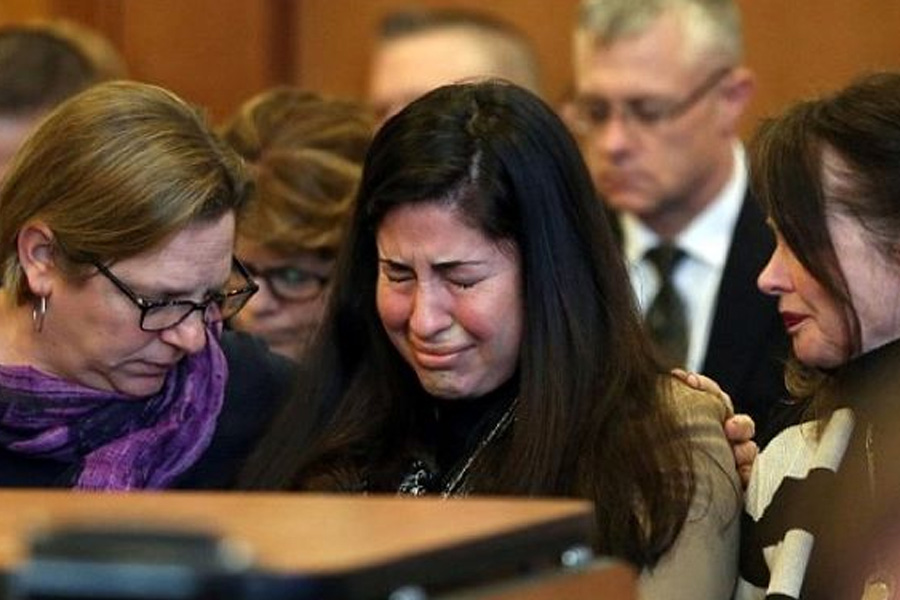
Diana’s role in this history was that of a mother whose family circumstances became part of a major criminal trial. She attended proceedings and expressed sorrow for Colleen Ritzer’s family while also communicating her love for her son.
In 2016, Philip was convicted of first-degree murder, aggravated rape, and armed robbery. He received a life sentence with parole eligibility after a lengthy period of incarceration. His convictions were subsequently upheld by the Massachusetts Supreme Judicial Court in 2025.
The distinction between maternal attachment and legal accountability is essential here. Diana’s expressions of love for Philip did not diminish the gravity of the crime or the loss experienced by Colleen Ritzer’s loved ones. They reflected the difficult reality of a parent confronting the actions of a child while a victim’s family seeks justice.
Isabella Christina Chism
Isabella Christina Chism was reportedly born on April 23, 2000. She is identified as Philip’s younger sister and Diana’s daughter.
Isabella was approximately 13 years old when the family moved to Massachusetts in 2013. The events surrounding her brother’s arrest therefore unfolded during her adolescence, a period already shaped by major emotional and developmental changes.
Public reporting about Isabella has remained limited. She was a minor during the criminal investigation and trial, and there is little reliable information about her education, career, adult relationships, or present circumstances.
That lack of information should not be mistaken for an absence of personal history. It reflects the importance of allowing relatives who were not accused of wrongdoing to maintain their privacy.
Diana’s Younger Daughter
Diana’s third child is another daughter whose name has not been broadly established in major public reporting. She lived with Diana and her siblings during the family’s time in Massachusetts.
Like Isabella, she was a minor when the 2013 events brought intense public attention to the family. Publishing speculative information about her identity or present life would serve little purpose and could compromise her privacy.
The two daughters occupy a different position in this story from their brother. They were members of the same household, but the public record does not justify treating them as responsible for his actions or assuming that their later lives followed any particular path.
Eduardo Barbieri and the Maternal Family
Eduardo Barbieri, Diana’s father and Philip’s maternal grandfather, became publicly relevant during the trial because of his testimony about family history.
He described mental health difficulties among relatives on the maternal side, including hospitalizations and treatment involving his wife, Joyce Barbieri. His testimony helped the defense explain why it believed Philip might have inherited or developed a vulnerability to serious psychiatric illness.
However, the family history was not conclusive proof of Philip’s mental state at the time of the crime. Under cross-examination, Eduardo acknowledged that the relatives with mental health difficulties had not demonstrated the same pattern of violence attributed to Philip.
This distinction matters. A family history of mental illness can provide useful clinical context, but it cannot independently establish criminal responsibility or excuse a particular act.
Joyce Barbieri
Joyce Barbieri, Diana’s mother, was reportedly deceased by the time of the later family events described in court. Testimony discussed her history of psychiatric hospitalizations and treatment.
Her experiences became relevant because the defense sought to establish a background of mental illness extending across generations. Still, the details available publicly are limited, and it would be inappropriate to infer a precise diagnosis from descriptions of treatment alone.
Terence Chism Blaine
Terence, also spelled Terrence, Chism Blaine is identified as an uncle on Philip’s paternal side. He spoke briefly in the aftermath of Philip’s arrest and described a positive impression of his nephew based on their earlier contact.
His comments illustrated the gap that can exist between a relative’s personal memories and the conduct later revealed in a criminal investigation. Family members may remember affection, ordinary childhood experiences, and familiar personality traits while struggling to reconcile those memories with extraordinary events.
Education, Career, and Professional Achievements
Diana’s professional background is one of the few areas of her life that can be discussed independently of her son’s criminal case.
She reportedly worked as a social worker connected with the Tennessee Department of Children’s Services. Her work involved the broader field of public social services, which often requires employees to balance family needs, administrative procedures, and difficult personal circumstances.
Around August 2011 to July 2012, she was also affiliated with the social work department at Austin Peay State University in Clarksville, Tennessee. During this period, she reportedly helped train Department of Children’s Services workers through a grant-supported program.
This experience suggests professional familiarity with child welfare systems and the challenges faced by families experiencing instability. Beyond these roles, however, there is insufficient public information to construct a complete employment history.
No widely documented record establishes significant business ownership, professional awards, or a high-profile career independent of her family circumstances.
Her professional life deserves consideration on its own terms. Social work is a demanding field that can involve complex family situations, vulnerable children, and emotionally difficult decisions. Yet the available information does not support claims about specific accomplishments beyond the reported roles.
Financial Circumstances and Lifestyle
Diana’s finances aren’t publicly available to determine her net worth. I wouldn’t value her based on her husband’s background, her job, or the criminal case.
According to early 2010s accounts, the marital disagreement, irregular support from the children’s father, and multiple transfers caused financial difficulty. Diana and her children resided with relatives in Danvers, including a basement apartment.
This indicates practical pressures but does not reveal income, savings, obligations, or assets.
There is no evidence that Diana gained fortune or had severe financial issues outside of the family disagreements. Her reported work in social services provides occupational background, while her household information suggests great uncertainty.
The 2013 Danvers Case and Diana’s Public Statements
October 2013 changed the Chism family’s public identity. After Philip was reported missing following school and soccer-related activities, events led to his arrest in connection with Colleen Ritzer’s death.
Diana subsequently faced an extraordinary situation: her son was accused of a grave crime, the victim’s family was grieving, and the circumstances of her own household became part of national reporting.
She expressed sorrow for Colleen Ritzer’s family while maintaining her love for Philip. Those two positions can coexist, although they are emotionally difficult to reconcile. A parent may continue to love a child while recognizing the devastating consequences of that child’s actions.
During the trial, testimony about family instability, mental health history, and Philip’s behavior before the crime became part of the defense’s broader explanation. Diana’s family background and parenting circumstances were discussed in the context of whether Philip had been experiencing a severe mental disorder.
The jury ultimately rejected the insanity defense. Its decision reflected the evidence and legal standards presented at trial, rather than a determination of Diana’s character as a mother.
Understanding the Trial Testimony About Mental Health
The psychiatric evidence in Philip’s trial helps explain why his family history received so much attention.
Defense psychiatrist Dr. Richard Dudley testified that Philip displayed symptoms consistent with a psychotic disorder, including reported auditory hallucinations, and argued that these symptoms substantially impaired his capacity to conform his conduct to the law.
Other defense-aligned clinicians discussed depression, psychotic symptoms, and changes observed during treatment. The defense also pointed to reported social withdrawal and changes in Philip’s behavior before the crime.
The prosecution presented a competing interpretation. Its experts, including forensic psychologist Dr. Robert Kinscherff and psychologist Dr. Nancy Hebben, challenged the claim that Philip had a qualifying mental disorder at the relevant time. They raised concerns about inconsistent symptom reporting and possible malingering.
The dispute was not simply whether Philip had experienced distress or had ever shown psychiatric symptoms. The central legal question was whether a qualifying mental disease or defect deprived him of criminal responsibility when the offenses occurred.
Family testimony, including Eduardo Barbieri’s account of psychiatric difficulties among relatives, was relevant but not decisive. The jury had to evaluate the full record, including expert disagreements, witness observations, and evidence of Philip’s actions.
For Diana, this meant that personal family history was examined through the demanding lens of a criminal trial. Private experiences became courtroom evidence, but the legal conclusions concerned Philip’s responsibility, not a general judgment about the worth of his relatives.
Life Away From the Public Spotlight
Diana’s public profile declined after Philip’s trial and imprisonment. More recent publicity has focused on Philip’s case rather than Diana’s life.
She has no notable social media presence to report her current activities. Thus, recent life accounts should be taken with a grain of salt unless substantiated by solid data.
Equal constraint applies to her daughters. Details on their adult lives, employment, relationships, and current places are lacking.
Diana’s low public profile raises numerous issues, but they shouldn’t be speculated on. Every family member’s private life is not public property only because they were in a notorious criminal case.
Extended Timeline of Diana Amanda Chism and Her Family
| Year or date | Event |
|---|---|
| Around December 25, 1978 | Diana Amanda Chism is reportedly born. |
| September 1998 | Diana marries Stacy Tremayne Chism in Clarksville, Tennessee. |
| January 21, 1999 | Philip Chism is born. |
| April 23, 2000 | Isabella Christina Chism is reportedly born. |
| Around 2001 | Separation-related legal proceedings begin amid marital difficulties. |
| 2011 to 2012 | Diana is reportedly involved in training Department of Children’s Services workers through an Austin Peay State University program. |
| 2011 and 2013 | Further divorce proceedings are reported. |
| 2013 | Diana moves with her children to Danvers, Massachusetts. |
| October 2013 | Philip is arrested in connection with Colleen Ritzer’s death. |
| Around late 2014 | Diana and Stacy’s divorce is reportedly finalized. |
| 2015 | Philip’s trial focuses heavily on criminal responsibility and psychiatric evidence. |
| 2016 | Philip is convicted and sentenced to life imprisonment with parole eligibility after a lengthy term. |
| 2020s | Diana remains largely outside public view while later reporting continues to revisit the case. |
| 2025 | Philip’s convictions are upheld by the Massachusetts Supreme Judicial Court. |
Frequently Asked Questions
Who Is Diana Amanda Chism?
Diana Amanda Chism is a private individual known publicly as the mother of Philip Chism, whose 2013 criminal case in Danvers, Massachusetts, received national attention. She has also been associated with social work and child welfare services in Tennessee.
Who Was Diana Chism Married To?
Diana married Stacy Tremayne Chism around September 5, 1998, in Clarksville, Tennessee. Their marriage involved prolonged separation and divorce proceedings, reportedly finalized around late 2014.
How Many Children Does Diana Amanda Chism Have?
Diana has three children with Stacy Tremayne Chism: Philip Chism, Isabella Christina Chism, and a younger daughter whose name has not been widely published.
What Happened to Philip Chism?
Philip was convicted in 2016 of first-degree murder, aggravated rape, and armed robbery in connection with the death of teacher Colleen Ritzer. He received a life sentence with parole eligibility after a lengthy period of incarceration. The Massachusetts Supreme Judicial Court upheld his convictions in 2025.
What Did Diana Chism Do for a Living?
Diana reportedly worked in social services connected to the Tennessee Department of Children’s Services. She was also affiliated with Austin Peay State University’s social work department around 2011 and 2012, where she reportedly helped train department workers.
Who Are Eduardo and Joyce Barbieri?
Eduardo and Joyce Barbieri are identified as Diana’s parents and Philip’s maternal grandparents. Eduardo testified about psychiatric difficulties in the extended family, while Joyce’s history of hospitalization and treatment was discussed during the trial.
Did Diana Chism Testify in Philip’s Trial?
Public accounts discuss Diana’s statements and the presentation of family history during Philip’s proceedings, but the precise extent of her formal testimony should not be assumed without a verified trial record. Her family circumstances were relevant to the defense’s explanation of Philip’s background.
What Is Diana Amanda Chism’s Net Worth?
Diana’s net worth is not reliably documented in public reporting. There is insufficient evidence to provide a credible estimate of her assets, savings, or overall financial position.
Where Is Diana Amanda Chism Now?
Her current location and personal activities are not reliably established in widely available public information. Reporting about her has largely diminished since Philip’s trial and sentencing, and she appears to maintain a private life away from public attention.
Why Was Diana Chism’s Family History Discussed in Court?
The defense introduced evidence of psychiatric difficulties among maternal relatives to provide context for its argument that Philip had experienced a serious mental disorder. The prosecution challenged the interpretation of his symptoms, and the jury ultimately found him criminally responsible.