Who Is Frank C Turner
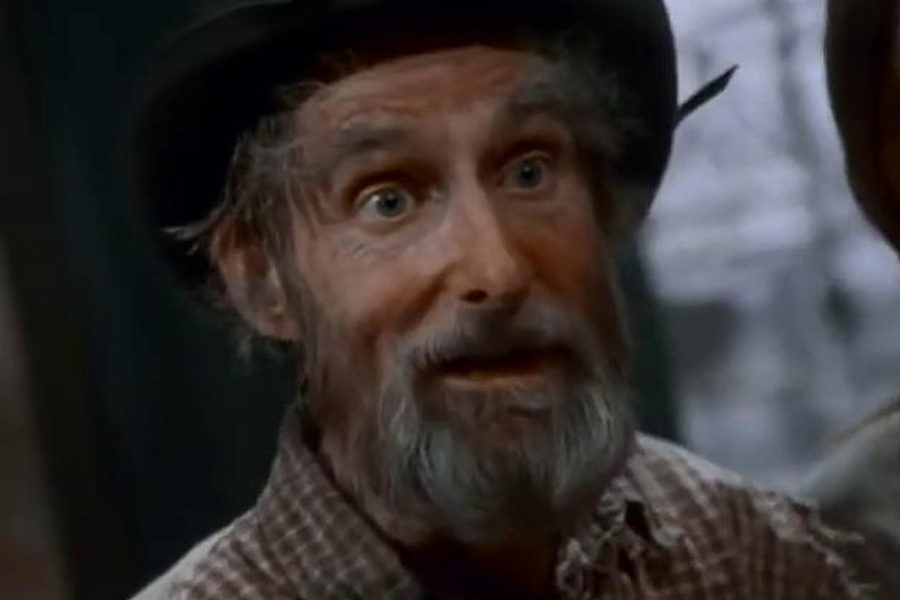
Frank C Turner, whose full name is Francis Charles Turner, is a Canadian character actor and Byzantine tradition iconographer known for his extensive work in film and television and his dedication to sacred art. Born on June 2, 1951, in Wainwright, Alberta, Canada, he has spent much of his adult life in British Columbia, particularly around Port Coquitlam, Port Moody, and Vancouver.
Standing approximately 6 feet tall, or 1.83 meters, Turner has built a career that bridges two very different worlds. In one, he brings memorable supporting characters to life on screen. In the other, he creates religious images intended to inspire prayer and contemplation.
I find this combination particularly interesting because acting and iconography demand different kinds of attention. Acting requires an artist to inhabit a character and communicate through movement, expression, and voice. Iconography asks the artist to work within an established spiritual tradition, allowing symbolism, color, and sacred subject matter to guide the finished image.
Turner has maintained both pursuits for decades, although his iconography has become an increasingly important part of his professional and personal identity. His Roman Catholic faith also plays a central role in his artistic life, connecting his work to the churches, communities, and religious traditions he serves.
Early Life and Education
Frank C Turner was born and raised in Alberta, where his early experiences with religion and church art helped shape his later interests. His childhood included serving as an altar boy, giving him an early connection to Catholic worship and the visual traditions found in parish churches.
Church interiors can leave lasting impressions on young visitors. Painted walls, statues, crucifixes, and images of saints create a visual language that often communicates ideas before a child fully understands their theological meaning. Turner’s early exposure to this environment would later become relevant to his development as an iconographer.
His formal artistic education initially focused on acting. In 1975, he graduated from the University of Alberta with a Bachelor of Fine Arts degree in acting. The training provided a foundation in performance, character interpretation, and the practical demands of theatre.
After graduation, Turner performed in theatres across western Canada and Ontario. These years allowed him to develop his stage presence and gain experience with different productions and audiences.
Theatre also requires patience, discipline, and a willingness to serve a larger artistic purpose. Those qualities would remain relevant throughout his later work in film, television, and sacred art.
Frank C Turner’s Acting Career
From Canadian Theatre to Film and Television
Turner relocated to Vancouver in 1983 and focused on cinema and television. In Canada’s booming movie production business, the city gave him a long career as a supporting actor.
Turner became known for playing many unique roles rather than one major role. His plays often include eccentrics, rustic types, unstable people, and outcasts.
Character actors help make fictitious worlds believable. Even a few-minute character appearance can add humor, suspense, or emotion to a situation. Turner has made adaptability his professional hallmark.
He has almost 150 film and TV credits. He writes humor, drama, science fiction, family entertainment, and supernatural stories.
Notable Film Roles
Turner’s filmography includes productions from several decades, reflecting the range of projects available to an experienced Canadian character actor.
| Year | Film | Notable detail |
|---|---|---|
| 1989 | The Fly II | An early screen credit |
| 1992 | Unforgiven | Appeared in the acclaimed Western |
| 1999 | The Duke | A family comedy |
| 2001 | Cats & Dogs | Part of a popular family film |
| 2002 | Snow Dogs | Appeared in the adventure comedy |
| 2003 | Scary Movie 3 | Worked in comedy |
| 2009 | 2012 | Played the Preacher |
| 2012 | Diary of a Wimpy Kid Dog Days | Appeared in the family comedy |
| 2016 | Warcraft | Contributed to the fantasy film |
| 2020 | Sonic the Hedgehog | Played Crazy Carl |
His role as Crazy Carl in Sonic the Hedgehog introduced him to audiences through a major video game adaptation. The character fits Turner’s familiar screen persona, combining an unusual personality with a place in a larger fictional community.
His appearances in family films such as Air Bud, Cats & Dogs, and Snow Dogs also demonstrate how frequently his work has reached audiences across different age groups.
Television Roles and Recognition
Turner has appeared in numerous television productions, including several well-known science fiction and fantasy series. His credits include The X-Files, The Outer Limits, Stargate SG-1, Smallville, and Supernatural.
He also appeared in productions such as The Man in the High Castle, DC’s Legends of Tomorrow, The Crossing, and the 2019 revival of The Twilight Zone.
One of his notable television roles was Unbob Finch in Lonesome Dove The Outlaw Years, where he appeared during the 1995 to 1996 period. His performance earned him a Gemini Award nomination in 1997 for Best Performance by an Actor in a Guest Role in a Dramatic Series.
This recognition marked an important moment in his acting career. Awards and nominations can bring attention to performances that might otherwise be overshadowed by a production’s leading cast.
Beyond conventional screen acting, Turner has portrayed George Bernard Shaw in theatrical debates opposite performers representing G. K. Chesterton. He has also participated in presentations associated with EWTN’s Apostle of Common Sense.
His professional life therefore extends beyond film sets, encompassing theatre, educational activities, and performances connected with religious and intellectual traditions.
Frank C Turner and His Family Members
Marriage to Jan Turner
Frank C Turner married Jan Turner in 1976. Their marriage has continued for decades, spanning his transition from regional theatre to Vancouver’s film industry and his development as a sacred artist.
A long marriage can provide continuity during a career characterized by changing schedules, temporary productions, and uncertain employment. Acting work often involves periods of intense activity followed by quieter intervals, making family stability especially meaningful.
Turner’s wife has also played a notable role in his artistic development. In 1989, she spotted a newspaper notice advertising an iconography workshop. That discovery encouraged Turner to explore a field that would eventually become one of his defining pursuits.
The detail offers a glimpse into how a seemingly ordinary moment can alter the direction of a person’s life. A newspaper announcement led Turner toward teachers, traditional techniques, religious commissions, and a second artistic vocation.
Jan Turner is also associated with the couple’s Catholic parish life. Their shared religious commitments form an important part of the personal background surrounding Turner’s work in sacred art.
Frank C Turner and His Four Children
Frank and Jan Turner have four children. Although the number of children is publicly reported, their names and individual biographies are not established in the available biographical information.
I consider this distinction important when discussing a public figure’s family. A person’s professional achievements may be documented in detail, but that does not mean every family member has chosen to live publicly.
The available information does not provide a reliable account of the children’s occupations, ages, education, marriages, or current activities. It would therefore be inappropriate to fill these gaps with assumptions.
What can be said is that Turner has maintained his family life alongside a demanding professional career and a sustained commitment to Catholic artistic traditions. His marriage began in 1976, several years before his move to Vancouver in 1983 and more than a decade before he began formal iconography studies.
The family’s history thus overlaps with both major strands of his working life: acting and sacred art.
Parents, Siblings, and Extended Family
Detailed public information about Turner’s parents, siblings, and extended relatives is limited. His birthplace and early religious experiences are known in broad terms, but a comprehensive family genealogy is not available from the biographical details considered here.
I would avoid drawing conclusions about his relatives or attributing artistic, religious, or professional achievements to them without reliable information.
This limited public record is consistent with a person whose recognition comes primarily from professional work rather than from extensive media coverage of his private life.
Frank C Turner’s Catholic Faith and Parish Life
Roman Catholic Turner has long been affiliated with Holy Family Parish in Vancouver, a Priestly Fraternity of St. Peter apostolate.
His religious beliefs and iconography are intertwined. Turner sees icons as devotional and theological objects, unlike artists who use religious imagery for visual experimentation.
Writing rather than painting icons is common in Byzantine Christianity. The statement acknowledges that icons convey sacred significance through symbols, forms, and imagery.
Turner saw this tradition as a way to use art for service. His art blends craftsmanship, history, and religion.
His parish work includes renewing Stations of the Cross. Such undertakings require more than technical skills. They place art in a community’s worship and spiritual life.
The relationship between faith and art is not entirely personal. It affects Turner’s subjects, materials, situations, and intended meaning.
Frank C Turner as a Byzantine Tradition Iconographer
How His Iconography Journey Began
Turner’s formal iconography studies began around 1989 to 1991, when he attended workshops with Russian master Vladislav Andreyev of the Prosopon School of Iconology.
This training introduced him to the structured methods and spiritual principles associated with traditional icon painting. Rather than treating every image as an opportunity for unrestricted personal expression, the iconographer learns to work within an established visual language.
Turner subsequently studied at the Mount Angel Iconography Institute in Oregon. His training included instruction from artists such as Charles Rohrbacher, Mary Katsilometes, Cathy Sievers, and others.
A particularly influential period came around 2006 and 2007, when Turner spent several weeks studying with Father Gianluca Busi in Bologna, Italy. He later described this experience as a turning point in his development, helping him gain confidence in undertaking larger commissions.
These experiences brought together different teachers and approaches while maintaining a shared commitment to the traditional iconographic heritage.
Traditional Materials and Techniques
Turner’s iconography relies primarily on egg tempera applied to carefully prepared wooden panels. The process is slow and deliberate, with each stage contributing to the appearance and durability of the finished image.
His working methods include several traditional elements:
-
Wooden panels: He prepares his own boards to create a suitable foundation for the painting.
-
Ground preparation: Layers of chalk-based ground and animal glue produce a smooth surface for fine detail.
-
Egg tempera: Pigments are mixed with an egg-based binder, allowing the artist to build color through controlled layers.
-
Natural pigments: Mineral and earth colors provide the palette, including blue pigments associated with heavenly imagery and red ochre used in traditional sacred art.
-
Gold leaf: Gold is applied to selected areas, particularly halos and backgrounds, to evoke sacred radiance.
These materials reward patience. Egg tempera does not behave like modern acrylic paint, and the preparation of the board alone can require considerable care.
Gold leaf adds another dimension to the process. In an icon, gold is not simply decoration. It can suggest a reality beyond ordinary physical space, distinguishing the sacred image from a naturalistic scene.
Turner has described icon creation as a prayerful activity, emphasizing the idea of raising inanimate materials toward God. That understanding influences both his working process and the way he regards completed icons.
Major Sacred Art Commissions
Turner has completed more than 50 to 60 icons, ranging from smaller devotional images for private clients to large works intended for churches and public religious spaces.
His projects include a substantial group of icons for Corpus Christi Church in Vancouver, an image of St. Joseph for a chapel in London, Ontario, and a monumental crucifix for the lobby of the John Paul II Pastoral Centre.
One of his most prominent commissions is the suspended crucifix in Holy Rosary Cathedral in Vancouver, completed around 2014 to 2015.
The work follows the Romanesque Christus Triumphans tradition. Christ appears upright on the cross with open eyes, emphasizing victory over death rather than focusing exclusively on physical suffering.
The cross incorporates bright blue elements, subsidiary figures of the Virgin Mary and St. John, Greek inscriptions, and an extensive rosary motif formed from 223 gold beads representing the Joyful, Sorrowful, Glorious, and Luminous Mysteries.
The project required substantial craftsmanship and careful coordination of its artistic and architectural elements. Its monumental scale also distinguishes it from the smaller icons Turner creates for individual devotion.
Other subjects in his work include St. Michael the Archangel, Christ Pantocrator, St. Jude, Our Lady Seat of Wisdom, St. Anne, St. Monica, St. Benedict, St. John the Baptist, and Pentecost scenes.
Teaching, Sacred Arts, and Community Involvement
Turner’s work extends beyond creating individual commissions. He has taught iconography privately and through workshops, helping students learn the techniques and theological principles associated with traditional sacred images.
He has also conducted workshops in acting, mask, voice, and puppetry. These educational activities reflect the range of his artistic background and his experience communicating ideas through different forms of performance and visual expression.
His activities have included voice instruction at the Seminary of Christ the King in Mission, British Columbia, as well as teaching associated with Living Water College of the Arts and Redeemer Pacific College.
Turner also helped establish the Epiphany Sacred Arts Guild, with discussions beginning in the late 1990s and formal establishment around 2002 to 2003. He served as its president for approximately ten years.
The guild’s purpose reflects a broader interest in restoring and supporting sacred art within contemporary Christian communities. Its development drew inspiration from the relationship between artistic creativity, Catholic tradition, and the Church’s understanding of artists’ responsibilities.
Turner’s participation in a polyphonic choir adds another dimension to his connection with liturgical art. Painting, music, and architecture all contribute to the sensory environment of religious worship, even though each medium operates through different methods.
Frank C Turner’s Lifestyle and Financial Background
Turner has spent decades in the Vancouver metropolitan area, including communities such as Port Coquitlam and Port Moody. His professional life has required him to balance screen acting with artistic commissions, teaching, and parish activities.
Unlike actors whose careers revolve around leading roles and constant media attention, character actors often build their working lives through many separate productions. Each credit may represent a short period of employment, a supporting role, or a guest appearance.
Iconography follows a different rhythm. A large religious commission can require months or years of planning, preparation, painting, and finishing. The artist must also maintain traditional skills and acquire appropriate materials.
These contrasting demands help explain the unusual shape of Turner’s career. One vocation places him within collaborative productions; the other often requires extended periods of solitary concentration.
Reliable information about his personal finances is limited. Some unofficial celebrity biography websites have suggested a net worth of approximately $3 million to $5 million, but such estimates have not been independently verified.
There is no comprehensive public breakdown of his acting salaries, residual payments, icon commissions, teaching income, or household finances. The suggested figures should therefore be treated as speculation rather than established fact.
His decades of professional activity demonstrate sustained artistic work, but they do not reveal his actual wealth or financial arrangements.
Frank C Turner in Recent Years
Turner’s recent public profile is influenced by his acting and sacred art credits. Fans of his film career remember his role as Crazy Carl in Sonic the Hedgehog.
Catholic artists have noticed his gigantic crucifix at Holy Rosary Cathedral and his symbolism.
His career shows how an artist can pursue a second career without forsaking previous skills. Performance and icon writing may seem distinct, yet both require concentration, planning, and an awareness of how art communicates meaning.
Public information on his post-2020 activity is scarce. His current acting assignments, private commissions, and family developments are not publicly available.
His low social media presence also keeps many of his daily activities private. The image shows an experienced actor, a practicing Catholic, and a sacred imagery artist.
FAQ
Who is Frank C Turner?
Frank C Turner is a Canadian character actor and Byzantine tradition iconographer. Born on June 2, 1951, in Wainwright, Alberta, he has appeared in more than 150 film and television productions and created numerous sacred images for churches and private clients.
What is Frank C Turner’s full name?
His full name is Francis Charles Turner. He is professionally known as Frank C Turner and has worked primarily in the Canadian film and television industry.
Who is Frank C Turner’s wife?
Frank C Turner’s wife is Jan Turner. They married in 1976 and have remained married for decades. She also played an important role in his artistic development by noticing a newspaper announcement for an iconography workshop in 1989.
How many children does Frank C Turner have?
Frank C Turner and his wife, Jan, have four children. Their names and individual biographies are not established in the publicly available biographical details discussed here.
What is known about Frank C Turner’s parents and siblings?
Detailed information about his parents, siblings, and extended family is limited. His birthplace, education, marriage, and professional career are better documented than his family genealogy.
What are Frank C Turner’s most famous acting roles?
His notable screen credits include Unforgiven, The Fly II, Cats & Dogs, Snow Dogs, 2012, Warcraft, and Sonic the Hedgehog, in which he played Crazy Carl. He also appeared in Lonesome Dove The Outlaw Years and several prominent science fiction and fantasy television series.
Did Frank C Turner receive an acting award?
Turner received a Gemini Award nomination in 1997 for Best Performance by an Actor in a Guest Role in a Dramatic Series for his work on Lonesome Dove The Outlaw Years. The nomination recognized his contribution to Canadian television drama.
What kind of icons does Frank C Turner create?
Turner creates Byzantine tradition icons using traditional methods, including egg tempera, prepared wooden panels, mineral pigments, and gold leaf. His subjects include Christ, the Virgin Mary, saints, archangels, and biblical events.
What is Frank C Turner’s most notable iconography project?
One of his most prominent projects is the suspended Christus Triumphans crucifix at Holy Rosary Cathedral in Vancouver, completed around 2014 to 2015. The work incorporates Romanesque artistic influences, Greek inscriptions, subsidiary figures, and a rosary motif consisting of 223 gold beads.
Where did Frank C Turner study iconography?
He began studying with Russian master Vladislav Andreyev of the Prosopon School around 1989 to 1991. He later attended the Mount Angel Iconography Institute in Oregon and studied with Father Gianluca Busi in Bologna, Italy, around 2006 to 2007.
Is Frank C Turner still involved in sacred art?
His established professional history includes icon commissions, teaching, and involvement in Catholic sacred arts organizations. However, comprehensive public information confirming the full extent of his activities after 2020 is limited.
What is Frank C Turner’s estimated net worth?
Some unofficial websites have estimated his net worth at $3 million to $5 million. These estimates are unverified, and reliable public information about his income, assets, acting residuals, and iconography earnings is unavailable.
Where does Frank C Turner live?
Turner has lived for decades in the Vancouver metropolitan area of British Columbia, with biographical accounts associating him with Port Coquitlam, Port Moody, and Vancouver. More precise current residential information is not necessary to understand his public career.
What makes Frank C Turner’s artistic career distinctive?
His career combines professional screen acting with the creation of traditional Christian sacred art. He has spent decades portraying varied characters in film and television while also producing icons intended for prayer, worship, and private devotion. This dual vocation connects performance, craftsmanship, and religious commitment within one artistic life.