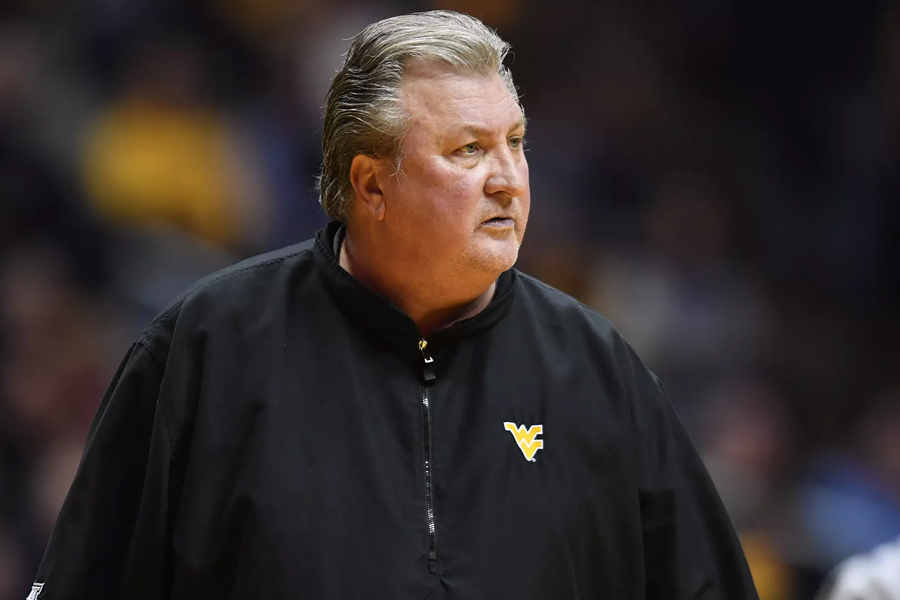
I see Bobby Huggins as more than a basketball coach. I see a man shaped by a tight family circle, sharpened by competition, and carried by decades of pressure, praise, controversy, and reinvention. His story has the texture of old hardwood: polished by time, scratched by battles, and still echoing long after the final buzzer.
Basic Information
| Item | Details |
|---|---|
| Full name | Bobby Huggins |
| Common public name | Bob Huggins |
| Birth date | September 21, 1953 |
| Birthplace | Morgantown, West Virginia |
| Profession | College basketball coach, broadcaster, public figure |
| Schools associated with career | Walsh, Akron, Cincinnati, Kansas State, West Virginia |
| Notable honor | Naismith Memorial Basketball Hall of Fame inductee |
| Spouse | June Huggins |
| Children | Jenna Leigh Huggins, Jacqueline Huggins |
A Biography Built Around Basketball
I imagine Bobby Huggins’ life as a difficult mountain climb. His basketball career expanded beyond Morgantown, West Virginia, where he was born in 1953. After one season at Ohio, he returned to West Virginia and joined the Mountaineers. After earning his undergraduate and master’s degrees, his journey balances court and classroom, perspiration and discipline.
He didn’t take up coaching accidentally. He deliberately approached. He was a graduate assistant at West Virginia, Ohio State, and Walsh before becoming head coach in 1980. From there, his career grew like a river after rain. Akron followed. Cincinnati followed. Kan. State followed. He returned to West Virginia and spent years there as a program face, arena voice, and basketball talker.
I find it remarkable that his life is more than wins. The record shows persistence. He coached in several leagues, areas, and games against different generations and opponents. Trophy count and voyage length important.
The Family at the Center of the Story
When I look at Bobby Huggins’ family, I see a basketball dynasty with a strong emotional spine. The family is large, rooted, and public in a way that feels almost like a local institution.
His parents were Charlie Huggins and Norma Huggins. Charlie was deeply tied to high school basketball, and Norma was more than a supporting figure. She was a home base, a steady center, someone whose presence helped hold the family together through years of movement and pressure. I see them as the kind of parents whose influence does not fade when the children grow up. It keeps echoing in the way the family speaks, works, and shows up in the world.
Bob’s spouse is June Huggins. Together, they have two daughters, Jenna Leigh Huggins and Jacqueline Huggins. In the public record, their names appear often enough to show that family life remained an important thread even while Bob lived in the loud, unforgiving spotlight of college sports. The daughters stand as part of the next generation of the Huggins family story, and I read that as continuity rather than footnote.
His siblings form a wide branch of the same family tree: Larry Huggins, Harry Huggins, Debbie Huggins Bradford, Karen Monaco, Linda Burr, and Judy Mathias. That is a strong family network, and I think it matters because families like that often create a private world within a public life. They give a person roots when the outside world turns into headlines, statistics, and scrutiny.
I also notice that the family legacy is not merely symbolic. It is active. The Huggins name appears in basketball circles, community efforts, and public events. That kind of continuity has weight. It is not a decorative family portrait. It is a living mural.
Career Achievements That Stretch Across Decades
I cannot separate Bobby Huggins from his coaching achievements, because the two are braided tightly together. His career began in earnest in the early 1980s and kept expanding for decades. Walsh was the first long stop, and he won there. Akron followed, and he won there too. Cincinnati became one of his defining chapters, where he built a serious national profile. West Virginia became the place where much of his identity settled for the long term.
His teams were known for toughness, structure, and a kind of emotional voltage that could charge a whole building. He reached a Final Four with Cincinnati in 1992. He reached another Final Four with West Virginia in 2010. He won conference titles, tournament titles, and enough games to place himself among the most successful coaches in college basketball history.
What stands out to me is the span of the achievement. This was not a brief blaze. It was a furnace. Over time, the numbers accumulated: hundreds of wins, multiple NCAA Tournament runs, and a reputation built on intensity and authority. He was the sort of coach who could loom over a sideline the way a storm cloud looms over a summer field.
He later received major honors, including Hall of Fame recognition. That matters because it places his work inside the formal memory of the sport. A Hall of Fame nod is not just applause. It is an archive stamp.
Net Worth, Compensation, and Public Estimate
When people talk about Bobby Huggins’ finances, the truth is that exact net worth figures are not publicly verified in a clean, official way. What I can say is that his coaching compensation reached high levels, especially in the later part of his West Virginia tenure. Annual pay in the millions put him in the top tier of college coaching earners.
I also think it is fair to say that any net worth estimate should be treated carefully. Public figures often attract inflated guesses or rough approximations. In Huggins’ case, the safer reading is that a long career in top-level coaching, media appearances, and public visibility likely built substantial wealth, but the precise number should not be treated like a fact carved in stone.
Recent Public Attention and Social Presence
In recent years, Bobby Huggins has been included in events, local media, alumni attention, and legacy discussions. His public image has two layers. The celebration layer emphasizes his coaching legacy, basketball history, and community events. The controversies that ended his West Virginia term affect the other layer.
That combination matters. Few hallways are clean in public memory. It’s more like a house with bright and dim rooms. Because of his background, emotion, and strong ideas, Huggins remains famous. People don’t simply remember a coach when they discuss his family or work. They recall an era of basketball.
Extended Timeline of Bobby Huggins
1953 to the 1970s: Early Life and Formative Years
I place his birth in 1953 as the opening scene of the story. He grew up in a basketball environment, then moved into college play and later into graduate work. Those early years matter because they built the foundation for everything that followed.
1980s: The Rise of a Coach
In 1980, he became a head coach at Walsh. That was the beginning of a major professional climb. Akron came next, then Cincinnati. By the end of the decade, he had already proven he could build programs and command attention.
1990s and 2000s: National Prominence
The 1992 Final Four with Cincinnati was a peak moment. Later, he entered new chapters at Kansas State and then West Virginia. By this point, his name had become a fixture in college basketball conversation.
2010s: Peak Visibility and Lasting Power
West Virginia gave him another Final Four in 2010 and years of national relevance. The program became tied to his personality and coaching style. He was not just coaching games. He was shaping the atmosphere around them.
2020s: Honors, Controversy, and Legacy Work
The 2020s brought Hall of Fame recognition, public controversy, resignation from West Virginia, and continued appearances tied to his legacy. The story did not end. It changed shape.
FAQ
Who is Bobby Huggins?
I see Bobby Huggins as a longtime college basketball coach whose career stretched across Walsh, Akron, Cincinnati, Kansas State, and West Virginia. He is widely known for his wins, his intensity, and his place in the sport’s history.
Who are Bobby Huggins’ family members?
His parents are Charlie Huggins and Norma Huggins. His spouse is June Huggins. His children are Jenna Leigh Huggins and Jacqueline Huggins. His siblings include Larry Huggins, Harry Huggins, Debbie Huggins Bradford, Karen Monaco, Linda Burr, and Judy Mathias.
What made his career notable?
I think his career stood out because of its length, its success across multiple programs, and its major peaks at Cincinnati and West Virginia. He won at a high level for many years and became one of the most recognized coaches in the game.
Is Bobby Huggins still part of public basketball life?
Yes. Even after leaving the sideline, his name still appears in media coverage, alumni events, and discussions of basketball history. His legacy still has a pulse.