Deandre Hunter at a Glance
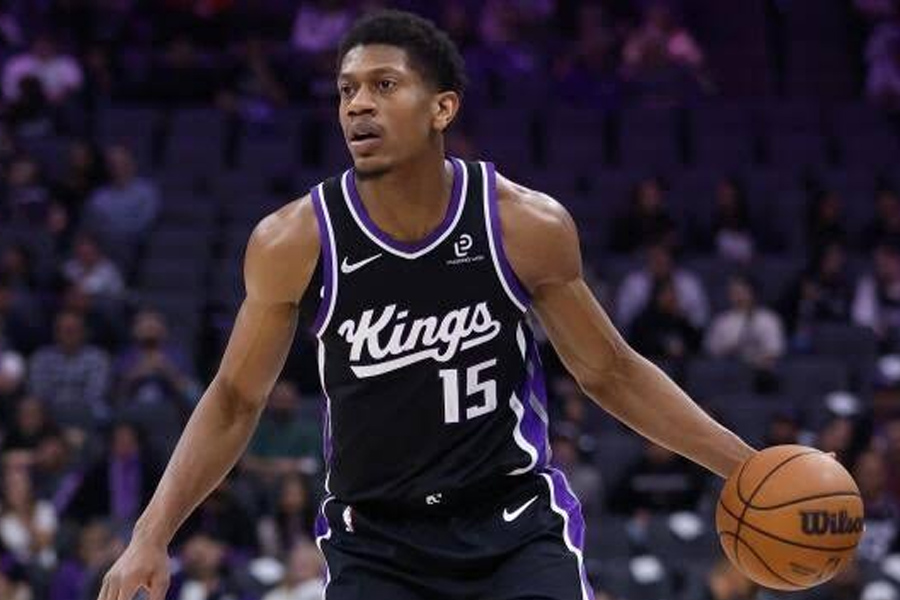
I see more than a professional basketball player in Deandre Hunter. I see a steady, methodical man who developed his career layer by layer, like a mason putting stone without noise. De’Andre Hunter, a 6-foot-7 American wing, was born in Philadelphia, Pennsylvania, on December 2, 1997. He went from Friends’ Central School to the University of Virginia and then to the NBA as the 4th choice in the 2019 draft.
His profile has always had two main themes. First, he is a talented two-way player with good defense, control, and scoring. Second, his family has suffered, persevered, and remained faithful. These two threads run across most of his life.
Hunter became a reliable NBA wing with career averages of 13.7 points, 4.1 rebounds, and 2.0 assists. Initially with Atlanta, he later played for Cleveland and Sacramento. His career has seen contract milestones, trade headlines, injuries, and top-tier play. His public image remains anchored. He is not a showoff. More like a quiet engine.
Early Life in Philadelphia
Hunter’s early background explains his calmness, hence I think it vital. Born and bred in Philadelphia, he attended Friends’ Central School in Wynnewood. He developed in an intellectual and athletic environment before the NBA cameras followed him.
He suffered a severe loss in childhood. Deandre was seven when his father, Aaron Hunter Sr., died. That incident can upset a family’s rhythm, but Hunter’s looks to have deepened his emotional bonds. As he aged, the familial tie remained strong.
I think this element of his story shapes the box scorer. Statistics define many athletes before humanity. Hunter is inextricably linked to his family. Grief from losing his father early persisted. He incorporated it into his steel.
High School Rise and Basketball Identity
At Friends’ Central, Hunter emerged as one of Pennsylvania’s top high school players. He earned Pennsylvania Class AA Player of the Year honors and collected multiple all-state recognitions. Those awards did not arrive by accident. They reflected a game that was already versatile and mature.
Hunter was more than a scorer. He identified with length, patience, and defense. Players flame hot and wild. Hunter frequently plays like a closed door. He constricts space. Forces opponents into awkward angles. He scores in controlled spurts rather than chaotic waves.
By the time he finished high school, he was regarded as one of the better small forwards in his class. That set the stage for his next step at Virginia, where his discipline and measured style fit naturally.
Virginia Years and National Breakthrough
Virginia was the turning point in Hunter’s climb. He joined a structured, accountable, and defensive program. The 2016-17 season was his first redshirt. That delay mattered. He could grow, understand the system, and improve his skills without rushing on the floor.
In 2017-18, he broke through as ACC Sixth Man of the Year and earned All-Freshman Team honors. That season introduced him as a high-value contributor. He was not just promising. He was already affecting winning basketball.
The 2018-19 season altered everything. Hunter became a college basketball superstar. ACC Defensive Player of the Year, NABC Defense Player of the Year, All-ACC First Team, and Consensus Third-Team All-American. Most significantly, he led Virginia to the 2019 NCAA title.
Title runs put him on the national spotlight. One of his best collegiate performances was in the championship game versus Texas Tech. Big occasions typically show if a player can handle pressure. Hunter seems made for it. He acted like a guy traveling through fire without emotion.
Virginia also reflected his broader goals. Publicly, he expressed interest in excelling both academically and athletically. That balance fit his public identity well. He never seemed to present himself as only an athlete. There was always a sense of intention behind the movement.
Deandre Hunter’s Family Members
If I focus on the people closest to Deandre Hunter, five family members stand out publicly: his father Aaron Hunter Sr., his mother Priscilla Hunter, his older brother Aaron Hunter Jr., and his sisters Candice Hunter and Cheyanne Hunter.
Aaron Hunter Sr.
Hunter’s father, Aaron Hunter Sr., remains one of the defining figures in his life story even though Deandre lost him at a young age. He died when Deandre was seven. That loss created a deep emotional mark on the family. It also became part of the motivation that shaped Deandre’s path.
I do not think of this detail as background trivia. It feels more like the first chapter of the book. The absence of his father sharpened the role of everyone else around him.
Priscilla Hunter
Priscilla Hunter, Deandre’s mother, appears as the emotional center of the family. She has been described as the rock of the household, the person who kept support steady after tragedy struck. That kind of presence often goes unseen from the outside, but it can define everything inside a family.
When Deandre turned professional, he moved his mother to Atlanta. That detail says a lot. It suggests gratitude, closeness, and a desire to keep family near as his career expanded. Rather than treating success as a private tower, he seemed to use it like a bridge.
Aaron Hunter Jr.
Aaron Hunter Jr., Deandre’s older brother, shaped him. Aaron took up a fatherly role when their father died. He encouraged Deandre’s basketball career and passion of the game.
This relationship stands out to me because older siblings can become anchors in difficult years. Aaron Jr. appears to have been exactly that. He did not simply cheer from a distance. He was engaged, invested, and influential.
Candice Hunter and Cheyanne Hunter
His sisters, Candice Hunter and Cheyanne Hunter, are officially designated as his immediate family, although their personal lives are less well-known. Still, their family role important. Hunter developed in a close-knit community.
Sometimes the public knows only a few names and roles, not every story behind them. In this case, what still comes through clearly is that Deandre Hunter’s family unit has long been an important source of stability.
NBA Draft and Professional Climb
Hunter was taken 4th overall in the NBA Draft in June 2019. That alone was impressive, but the night included trade action that got him to Atlanta. The fit made sense for a national champion and excellent defensive player. He entered the league as a skilled wing who could defend numerous positions and play more offensively.
His NBA years have included steady production and flashes of major scoring upside. During his time in Atlanta, he became a key rotation player and produced a career-high 35-point game against Miami. He was not always the loudest name on the roster, but he became one of the pieces coaches trusted.
He signed a four-year, $90 million-guaranteed agreement in October 2022, with a $95 million deal commonly mentioned. That contract showed the league valued him. Teams only make that type of financial investment if a player is a two-way asset.
Career changes occurred. He was moved from Atlanta to Cleveland on February 6, 2025, for Caris LeVert, Georges Niang, and draft assets. He was traded again to Sacramento on February 1, 2026, by three teams. These changes reminded me that NBA careers change like weather on water. A player may be central one month and moved the next.
Injuries, Setbacks, and Staying Power
No honest assessment of Hunter’s career ignores injuries and interruptions. Physical obstacles have slowed him down, like many wings forced to defend, absorb contact, and score. Roster changes and health difficulties shaped his Atlanta and beyond career.
In February 2026, he was reported to be out for the season after eye surgery. That news added another difficult chapter. Eye injuries are especially unsettling because they affect not just athletic rhythm but a player’s sense of control and comfort.
Still, Hunter’s career has shown staying power. He has remained relevant through role changes, team changes, and injury detours. That resilience fits the broader shape of his life. His story has never been about easy ground. It has been about firm footing.
Personal Life and Off-Court Character
Smaller personal facts also emerge. Hunter likes dancing and video games. These details may seem trivial compared to contract figures and playoff hopes, but they complete the picture. They imagine a young man with average interests in a unique field.
While adjusting to the NBA, he explored Atlanta with his mother and settled in. That picture seems natural and remains with me. Fame might make life seem polished, but home, family, habit, and trust are often more important.
Hunter’s public personality has usually seemed reserved, composed, and low-drama. In an era that often rewards noise, that quality can be overlooked. But there is value in being steady. Some players arrive like thunder. Others are more like a strong winter coat, dependable when the air turns hard.
Career Timeline
| Year | Milestone |
|---|---|
| 1997 | Born on December 2 in Philadelphia, Pennsylvania |
| 2016-17 | Redshirted at Virginia |
| 2017-18 | Won ACC Sixth Man of the Year and made the All-Freshman Team |
| 2018-19 | Won ACC Defensive Player of the Year and helped Virginia win the NCAA title |
| 2019 | Selected No. 4 overall in the NBA Draft |
| 2021-22 | Recorded a 35-point career-high game |
| 2022 | Agreed to a major four-year extension with Atlanta |
| 2025 | Traded from Atlanta to Cleveland |
| 2026 | Traded to Sacramento and later underwent season-ending eye surgery |
FAQ
Who is Deandre Hunter?
Deandre Hunter is an American professional basketball player born on December 2, 1997, in Philadelphia. He is a 6-foot-7 wing known for two-way play, defensive strength, and a calm on-court style. He played college basketball at Virginia and entered the NBA as the No. 4 pick in 2019.
What college did Deandre Hunter attend?
He attended the University of Virginia. After redshirting in 2016-17, he developed into one of the top players in the country and helped lead the program to the 2019 NCAA championship.
Who are Deandre Hunter’s family members?
Publicly identified immediate family members include his father Aaron Hunter Sr., his mother Priscilla Hunter, his older brother Aaron Hunter Jr., and his sisters Candice Hunter and Cheyanne Hunter. His family story is a central part of his biography.
What happened to Deandre Hunter’s father?
His father, Aaron Hunter Sr., died when Deandre was seven years old. That loss had a major impact on the family and became an important part of Hunter’s personal story and motivation.
What role did Deandre Hunter’s brother play in his life?
His older brother, Aaron Hunter Jr., played a major supportive role after their father died. He has been described as a strong guiding figure who stayed involved in Deandre’s basketball development and personal growth.
What are Deandre Hunter’s biggest basketball achievements?
His major achievements include winning ACC Sixth Man of the Year in 2017-18, ACC Defensive Player of the Year in 2018-19, NABC Defensive Player of the Year in 2018-19, and helping Virginia win the 2019 NCAA championship. He was also selected No. 4 overall in the 2019 NBA Draft.
What is known about Deandre Hunter’s NBA contract?
One of the clearest public financial details is his four-year extension with Atlanta, widely discussed as a deal worth $95 million with $90 million guaranteed. That contract reflected his value as a versatile NBA wing.
What teams has Deandre Hunter played for?
He began his NBA career with Atlanta, later moved to Cleveland, and was eventually listed with Sacramento. His career has included several significant transactions, especially in 2025 and 2026.
What is Deandre Hunter like off the court?
Off the court, he has been described as family-oriented, reserved, and grounded. He has also mentioned enjoying video games and dancing, and he has shown a strong bond with his mother and siblings.