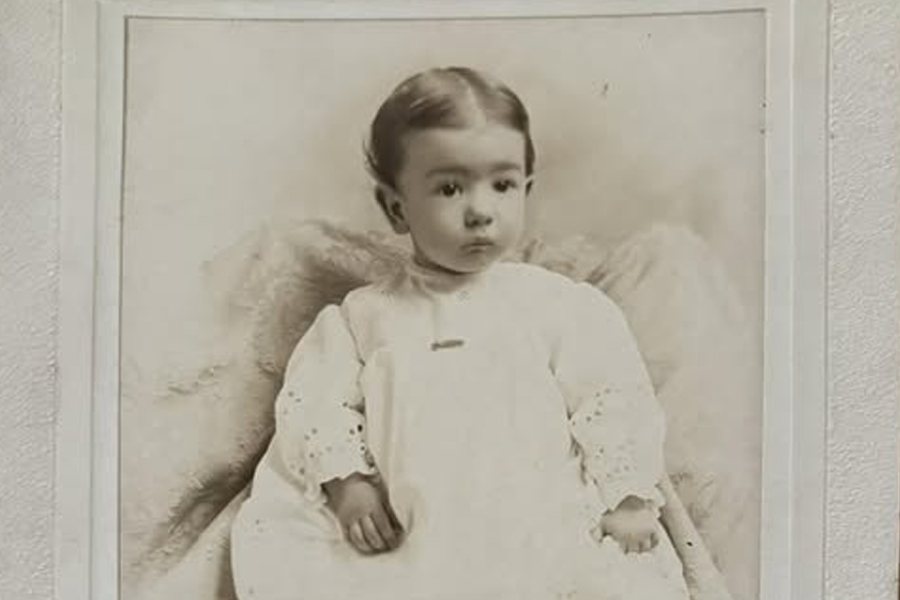
Who Was Elnora Sunden Jones
Elnora Sunden Jones, also known as Elnora Wallace Jones or simply Elnora Jones, was an African American woman born around August 1888 in Tate County, Mississippi. Although her name is not widely recognized in American cultural history, her family became connected to two generations of celebrated actors. She was the mother of Robert Earl Jones, a pioneering Black stage and screen performer, and the paternal grandmother of James Earl Jones, one of the most distinguished actors of the twentieth and early twenty first centuries.
Elnora lived during a period when African American families in the rural South faced severe economic limitations, racial discrimination, and restricted opportunities. Her life unfolded in a world shaped by cotton fields, agricultural labor, family obligations, and the complicated social structures of the Jim Crow era.
I find her story particularly meaningful because it offers a glimpse into the lives of people whose contributions to history rarely appear in headlines. Elnora did not achieve public recognition during her lifetime. Instead, her place in the historical record survives largely through her family relationships and the circumstances surrounding her son’s childhood.
The name Sunden appears in some accounts, but Elnora Wallace Jones is the more consistent form associated with her family history. The differences in spelling and naming reflect a familiar challenge in reconstructing the lives of ordinary people from records created more than a century ago.
Early Life in Tate County Mississippi
Elnora was born into a rural African American family in Tate County, in northwestern Mississippi. The area included agricultural communities near Senatobia and Coldwater, where cotton cultivation shaped the rhythm of everyday life.
Her parents were Pitcher Wallace, whose name also appears as Pretcher Wallace, and Sally Wallace, whose maiden name may have been Hunter. Her father worked as a farmer or laborer, occupations that placed the family within the agricultural economy that dominated the region.
Elnora grew up alongside sisters identified as Stella White, Lena Wright, also known as Lena Wallace, and Mamye Wallace. Their childhood would have unfolded in a society where Black families often depended on their collective labor to survive.
By 1900, Elnora appears to have been recorded as Nora Wallace in her parents’ household in Beat 1 of Tate County. She was approximately twelve years old. This detail offers a small but valuable window into her early life, connecting her to a specific household and community at the turn of the century.
For many children in rural Mississippi, childhood was not separated neatly from work. Household responsibilities, agricultural tasks, and caring for younger relatives could become part of daily life at an early age. Although Elnora’s precise experiences are unknown, the circumstances of her community help explain the environment in which she grew up.
Tate County and the World of Sharecropping
To understand Elnora’s family, I believe it is important to understand the economic landscape surrounding them. Tate County was deeply dependent on agriculture during the late nineteenth and early twentieth centuries, and cotton stood at the center of its economy.
Established in 1873, the county developed around farming, transportation, and small commercial communities. Senatobia served as an important shipping point, allowing agricultural products to move by rail to larger markets. Despite this commercial activity, wealth and land ownership remained unevenly distributed.
By 1900, Tate County had a population of approximately 20,618, and African Americans made up around 60 percent of its residents. Yet Black agricultural workers had very limited access to land ownership. Only a small proportion of Black farmers owned the land they cultivated.
Sharecropping became a defining feature of this economic system.
Under sharecropping arrangements, families worked land belonging to someone else and received an agreed portion of the harvested crop. Landowners or merchants might provide housing, seeds, tools, animals, and advances for food or clothing. At harvest time, these costs were deducted from the family’s earnings.
The arrangement could trap families in a cycle of debt. Poor harvests, falling cotton prices, high interest charges, and unequal control over crop sales made it difficult to save money or become independent landowners.
For Black families, these financial pressures existed alongside segregation, political exclusion, and the threat of racial violence. Hard work alone could not guarantee economic security.
Elnora’s household belonged to this broader rural world. Her son Robert Earl Jones later worked as a sharecropper to help support his family, illustrating how economic necessity could shape the choices available to an entire household.
The cotton fields were more than a workplace. For many families, they were the boundaries of a difficult existence, determining when people worked, how they ate, and whether they could imagine a different future.
Marriage to Robert Washington Jones
In Tate County, Mississippi, Elnora married Robert Washington Jones on December 25, 1907. Their Christmas Day wedding made this significant family milestone memorable in her life.
Robert Washington Jones is also known as Robert Jones and Robert W. Jones. Like Elnora, he is obscure in history.
They started a family in Tate County Beat 1. Their household appears in the 1910 and 1920 US censuses, indicating their ongoing presence in the region.
Their marriage began in a time when African American families had few economic options. Building a household needed teamwork, patience, and knowledge of a volatile agricultural system.
Little is known about their private relationship, although their family flourished amid a time of change. New transportation linkages, shifting farming practices, and the first significant waves of the Great Migration, when African Americans left the South for northern cities, occurred in the early 20th century.
The Jones family was related to rural Mississippi throughout this historical movement, according to accessible documents.
Children of Elnora and Robert Washington Jones
Elnora and Robert Washington Jones are associated with several children, including Robert Earl Jones, Brian Jones, Mary Jones, and John Earl Jones. The surviving biographical details are uneven, with Robert Earl receiving by far the greatest attention because of his acting career and his descendants.
| Child | Known details |
|---|---|
| Robert Earl Jones | Born February 3, 1910, in Tate County, Mississippi. Became an actor and boxer. |
| Brian Jones | Identified as a sibling of Robert Earl, with few widely documented personal details. |
| Mary Jones | Identified in family records as a daughter of Elnora and Robert Washington Jones. |
| John Earl Jones | Identified as another son, although detailed biographical information remains limited. |
The family’s story demonstrates how historical visibility is often distributed unevenly. One child may become famous, while the lives of siblings remain largely hidden behind incomplete records.
For Elnora, motherhood took place against the demands of rural labor and the economic uncertainty of the South. Raising children in such circumstances required meeting immediate needs while preparing the next generation for a world that offered them few advantages.
The limited information available does not allow me to describe her parenting style or personal beliefs with confidence. Nevertheless, the family’s documented circumstances reveal the pressures that surrounded their household.
Robert Earl Jones and His Journey Beyond Mississippi
Robert Earl Jones was born on February 3, 1910, in Tate County. He later became an accomplished actor whose career connected him to American theater, cinema, and the cultural movements of the twentieth century.
His early life was shaped by poverty and agricultural work. He left school at a young age to help support his family through sharecropping. That decision illustrates the difficult choices facing many rural children whose labor was essential to household survival.
Robert Earl eventually moved beyond the fields of Mississippi. Before establishing himself as an actor, he also pursued boxing and became associated with the ring name Battling Bill Stovall. He was reportedly a sparring partner of heavyweight champion Joe Louis.
His transition into performance opened a very different chapter of his life. He became involved in theater and worked with influential cultural figures, including Langston Hughes. His career developed during a period when African American performers were challenging racial barriers in entertainment while confronting persistent discrimination.
Robert Earl appeared in films including Lying Lips in 1939, The Sting in 1973, Trading Places in 1983, The Cotton Club in 1984, and Witness in 1985. His work on stage and screen helped establish him as a respected performer.
He died on September 7, 2006, in Englewood, New Jersey, at the age of 96.
His life provides a striking contrast to the rural world in which he began. The young man who worked in Mississippi cotton fields eventually entered an industry that brought him into contact with major performers, directors, and writers.
I see this transformation as one of the most compelling aspects of Elnora’s family history. It illustrates how a family’s circumstances can change dramatically across a single generation, even when the original struggles remain part of its historical foundation.
James Earl Jones and the Family’s Lasting Recognition
James Earl Jones, Elnora’s grandson, became a famous American entertainer.
James Earl Jones, born in Arkabutla, Mississippi, on January 17, 1931, has great success in theater, film, and television. His voice parts as Darth Vader in Star Wars and Mufasa in The Lion King were among his most notable.
James was born to Ruth Connolly and Robert Earl Jones. His maternal grandparents in Michigan reared him when his parents divorced. Therefore, he had little time to get to know his father and his paternal grandmother, Elnora.
James Earl Jones was noted for his loud voice, commanding stage presence, and impressive acting range. He won numerous awards and expanded Black actors’ opportunities in American theater and movies.
He died at 93 on September 9, 2024.
His celebrity revived his father’s family. Elnora was mostly known through genealogy rather than personal memories.
That gap matters. A famous descendant can enlighten a family’s history, but celebrity cannot cover all gaps in prior generations.
Elnora’s Grandchildren and Great Grandchildren
Through Robert Earl Jones, Elnora became the paternal grandmother of James Earl Jones and the grandmother of Matthew Earl Jones.
Robert Earl had three marriages. His first wife was Ruth Connolly, James Earl Jones’s mother. He later married Jumelle Jones and Ruth Williams. Matthew Earl Jones was his son with Ruth Williams and was living in Arizona at the time of his father’s death.
James Earl Jones’s family extended into another generation through his son Flynn Earl Jones. This made Elnora Flynn’s great grandmother.
The family tree stretches from rural Mississippi in the nineteenth century to the worlds of international theater and Hollywood in the twentieth and twenty first centuries.
| Generation | Family member | Historical significance |
|---|---|---|
| First | Elnora Wallace Jones | Rural Mississippi resident and mother of Robert Earl Jones. |
| First | Robert Washington Jones | Elnora’s husband and father of their children. |
| Second | Robert Earl Jones | Actor and former boxer who moved beyond agricultural labor. |
| Third | James Earl Jones | Internationally celebrated actor and voice performer. |
| Third | Matthew Earl Jones | Son of Robert Earl Jones and Ruth Williams. |
| Fourth | Flynn Earl Jones | Son of James Earl Jones and Elnora’s great grandson. |
These relationships connect a modest farming household to a family whose members became part of American cultural history.
However, the significance of Elnora’s life does not depend solely on the achievements of her descendants. Her own generation experienced the realities of racial inequality and agricultural dependence that shaped the lives of millions of African Americans.
Her Parents and the Wallace Family
Elnora’s roots extend through the Wallace family of Tate County. Her father, Pitcher or Pretcher Wallace, was associated with farming and labor, while her mother was known as Sally Wallace.
Her sisters, including Stella White, Lena Wright, and Mamye Wallace, represent another branch of the family whose individual stories remain incompletely documented.
Family names can change across records through marriage, spelling variations, and the conventions used by census enumerators. Elnora herself appears under several forms, including Nora Wallace before marriage and Elnora Jones afterward.
These variations make genealogical research both challenging and revealing. A single person may appear under different names across separate documents, and identifying the correct individual requires attention to dates, household members, locations, and family relationships.
The Wallace family’s history also reflects a broader reality of African American genealogy. For many families, written records are incomplete, and important details must be reconstructed from scattered references.
The absence of extensive documentation should not be mistaken for an absence of history. Families lived, worked, raised children, and maintained relationships whether or not their experiences were preserved in formal archives.
The Later Years and Death of Elnora Jones
Elnora is believed to have died in Mississippi in 1946, at approximately 57 or 58 years of age. The exact date, location, and circumstances of her death remain uncertain.
Her later years coincided with significant changes in the American South. The Great Depression had placed enormous pressure on farming communities, while mechanization and agricultural policy gradually altered the demand for manual labor.
World War II accelerated economic and social change. Industrial employment expanded in many American cities, attracting workers from rural communities. African Americans continued to migrate from the South in search of improved wages, greater freedom, and opportunities unavailable under segregation.
Arkabutla Lake, near the area associated with the Jones family’s history, was developed as part of federal flood control efforts and completed around 1942. Such changes altered the landscape of northwestern Mississippi during the final years of Elnora’s life.
There is little evidence to establish how these developments affected her personally. Nor is there a securely established burial location that allows her final resting place to be identified with confidence.
What remains is a broad outline of her life: a childhood in a rural Black household, a marriage in 1907, motherhood during a period of economic hardship, and a death in the middle of the twentieth century.
The Historical Importance of Ordinary Family Lives
Even with scant public records, Elnora’s narrative shows why family history important.
Mississippi’s African American history is generally told through political events, notable leaders, civil rights struggles, and cultural personalities. These stories are important, yet they miss some historical details.
Wallace and Jones families lived history via routines. Farming, marriage, raising children, debt management, and moving were not small details. They constituted daily life.
Sharecropping shaped the family’s finances. Racial disparity limited chances. Work may disrupt education. However, later generations entered new fields and cultural institutions.
Robert Earl Jones’s transition from farming to acting is an example. James Earl Jones’s exceptional career brought the family name worldwide.
Elnora’s voice is lost from history, and I don’t know her thoughts or goals. However, her life provides a crucial peek into the lives of Black women raising families in rural Mississippi during a time of great inequity.
FAQ
Who was Elnora Sunden Jones?
Elnora Sunden Jones, also known as Elnora Wallace Jones, was an African American woman born around August 1888 in Tate County, Mississippi. She was the mother of actor Robert Earl Jones and the paternal grandmother of actor James Earl Jones.
When was Elnora Sunden Jones born?
She was born around August 1888. Her birthplace is associated with Tate County, Mississippi, possibly near Senatobia or Coldwater.
Who were Elnora Jones’s parents?
Her parents were Pitcher Wallace, also recorded as Pretcher Wallace, and Sally Wallace. Her mother’s maiden name may have been Hunter.
Who was Elnora Jones married to?
Elnora married Robert Washington Jones on December 25, 1907, in Tate County, Mississippi. The couple lived in Beat 1 of the county during the early twentieth century.
How many children did Elnora Jones have?
The family information identifies four children: Robert Earl Jones, Brian Jones, Mary Jones, and John Earl Jones. Robert Earl is the best documented because of his acting career.
What was Robert Earl Jones known for?
Robert Earl Jones was an American actor and boxer. His acting career included films such as The Sting, Trading Places, The Cotton Club, and Witness. Before becoming an actor, he worked as a sharecropper and pursued boxing.
What was Elnora Jones’s relationship to James Earl Jones?
Elnora was James Earl Jones’s paternal grandmother. James was the son of Robert Earl Jones and Ruth Connolly. Because his parents separated when he was young, James was raised primarily by his maternal grandparents.
Did Elnora Jones work as a sharecropper?
The available family history places Elnora within a rural agricultural household, but it does not establish her precise occupation. Her son Robert Earl worked as a sharecropper to help support the family, reflecting the economic circumstances of many Black households in Tate County.
When did Elnora Sunden Jones die?
She is believed to have died in Mississippi in 1946, at approximately 57 or 58 years old. Her exact death date, burial location, and circumstances remain uncertain.
Did Elnora Jones know her famous grandson?
There is no detailed public account establishing the extent of their relationship. James Earl Jones spent much of his childhood with his maternal grandparents after his parents separated, and he had limited early contact with his father. This suggests that his connection to his paternal grandmother was likely limited, although the precise nature of their contact is not documented.
Who were Elnora Jones’s grandchildren and great grandchildren?
Her grandchildren included James Earl Jones and Matthew Earl Jones. Through James, she was the great grandmother of Flynn Earl Jones.
Why is Elnora Sunden Jones historically significant?
Elnora is significant as a representative of the family and community history behind two generations of prominent actors. Her life also provides a point of connection to the experiences of African American women in rural Mississippi, where sharecropping, racial discrimination, and restricted economic opportunities shaped everyday existence during the late nineteenth and early twentieth centuries.