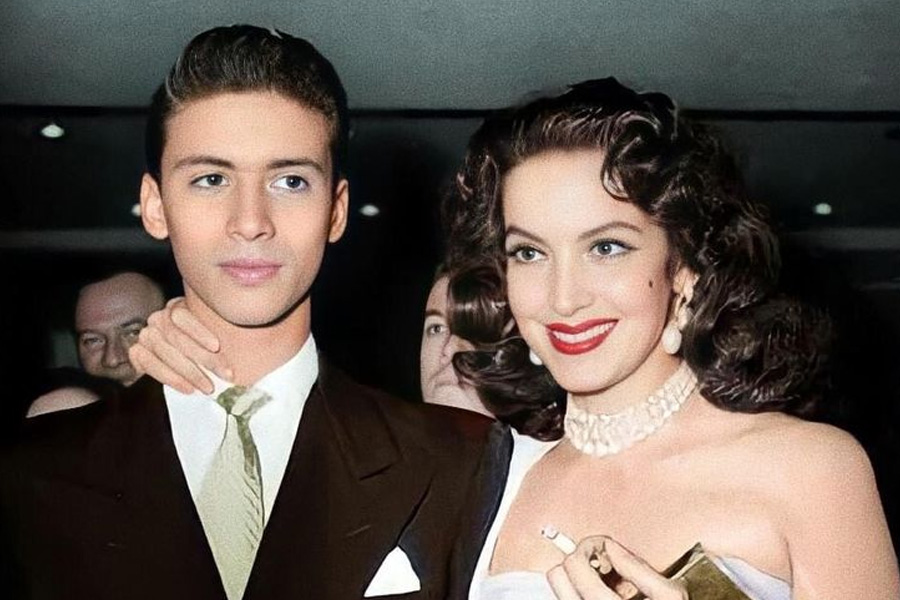
Who Was Enrique Alvarez Felix
Enrique Alvarez Felix (Quique) was a Mexican actor who worked in film, television, and theater. Born in April 1934 or 1935 in Guadalajara, Jalisco, he was noted for his emotion and memorable parts in classic Mexican plays. His name has another difference. He was the sole offspring of María Félix, the iconic actress known as La Doña, who shaped Mexican cinema.
Being the son of a legend was an honor and a challenge. María Félix was a prominent figure, her popularity filling a room before she entered. Enrique had to establish his niche amid that shadow. He studied and acted, developing a career in dramatic roles and popular telenovelas rather than relying on his mother’s reputation.
Artistic ambition, family strife, romantic uncertainty, and independence characterized his life. In his Mexico City Polanco apartment, he died on May 24, 1996. Depending on birth year, he was 61 or 62.
Enrique Alvarez Felix Basic Information
| Detail | Information |
|---|---|
| Full name | Enrique José Álvarez Félix |
| Common name | Enrique Alvarez Felix |
| Nickname | Quique |
| Birthplace | Guadalajara, Jalisco, Mexico |
| Birth date | Reported as April 5 or 6, 1934, or April 5, 1935 |
| Nationality | Mexican |
| Profession | Film, television, and theater actor |
| Mother | María Félix |
| Father | Enrique Álvarez Alatorre |
| Education | Political science studies at the National Autonomous University of Mexico |
| Marital status | Never married |
| Children | None publicly documented |
| Date of death | May 24, 1996 |
| Cause of death | Acute myocardial infarction |
| Burial place | Panteón Francés de San Joaquín, Mexico City |
Some biographical details remain inconsistent, particularly his exact birth date. These discrepancies are common in accounts of historical entertainment figures, especially when early personal records are not readily accessible.
María Félix Was His Famous Mother and Greatest Family Influence
María Félix, born María de los Ángeles Félix Güereña in 1914, was one of the most recognizable actresses in Mexican cinema. Known as La Doña and María Bonita, she cultivated an image of independence, elegance, and formidable strength. Her film career made her an international star, while her personality became almost as legendary as her performances.
Her relationship with Enrique was loving but complicated. They shared a strong emotional connection, yet their temperaments could clash. Both were reportedly strong-willed, and Enrique acknowledged that disagreements between them were frequent. Despite their arguments, he expressed profound attachment to his mother and suggested that life without her would be unimaginable.
Their separation during his childhood shaped their relationship. María’s acting career took her across borders, while Enrique spent substantial periods in boarding schools in Canada, the United States, and France. The arrangement gave him an international education but also created distance between mother and son.
María initially opposed his decision to become an actor. She understood the demands of the profession and may have feared that he would struggle beneath the expectations attached to her name. Their disagreement reportedly became so serious that she stopped speaking to him for months. Eventually, after he completed his studies and demonstrated his determination, she became more accepting of his chosen career.
Enrique never appeared opposite his mother in a completed acting project, although the possibility was discussed. Their relationship therefore remained a fascinating family story that unfolded largely away from the screen.
When Enrique died in 1996, María was in Paris. His death deeply affected her, and the loss remained part of the personal history behind her otherwise imposing public image. María died in 2002, and mother and son were ultimately laid to rest together at Panteón Francés de San Joaquín in Mexico City.
Enrique Alvarez Alatorre Was His Father
Enrique Álvarez Alatorre was a businessman from Jalisco and María Félix’s first husband. Accounts describe his professional activities in connection with sales and manufacturing, including cosmetics and footwear.
The couple married young, around 1931, but their relationship deteriorated during the following years. Their divorce is generally placed around 1937 or 1938. The separation led to disputes over their young son, who initially lived primarily with his father in Guadalajara.
Stories about María later taking Enrique to Mexico City have sometimes been described dramatically as a kidnapping. The accounts reflect the intense conflict surrounding custody and the determination María displayed when reclaiming a more active role in her son’s life.
Less information is publicly available about Enrique’s relationship with his father during adulthood. His professional life became increasingly associated with Mexico City’s entertainment industry, while his father’s activities remained largely outside public attention.
Enrique also reportedly had a paternal half-sister, Cecilia Álvarez Salas, mentioned in accounts of his extended family. The family connection adds another branch to his personal history beyond the celebrated Félix household.
His Maternal Grandparents and Extended Family
Enrique’s maternal grandparents were Bernardo Félix Flores and Josefina Güereña Rosas. Bernardo was described as a military officer with Yaqui ancestry, while Josefina had Basque and Spanish roots.
Through them, Enrique belonged to a much larger family network than his position as María Félix’s only child might suggest. María grew up in a large household in Sonora, and biographical accounts differ on the precise number of her siblings. Names associated with the family include Josefina, María de la Paz, Pablo, Bernardo, Miguel, Mercedes, Fernando, Ricardo, Benjamín, and Ana María del Sacramento.
One of Enrique’s maternal aunts was Victoria Eugenia Félix, also known as María Victoria Eugenia Félix Güereña. Born in 1916 in Navojoa, Sonora, she lived until 2017, reaching approximately 100 years of age. She married Antonio Paz Sieira and raised a family while remaining far less visible than her celebrated sister.
This difference between public fame and private family life is striking. María became an international symbol of Mexican cinema, while several of her relatives lived quietly, away from the attention that followed her throughout her career.
Jorge Negrete and Enrique’s Famous Stepfamily
María Félix married singer and actor Jorge Negrete in 1952. Their marriage lasted only a short time because Negrete died in December 1953, but it connected Enrique to another major figure in Mexican entertainment history.
Jorge Negrete was already an established star, celebrated for his singing voice, charro image, and appearances in Mexican musical films. His marriage to María brought together two formidable personalities whose relationship attracted considerable public interest.
Through this marriage, Enrique became Negrete’s stepson and the stepbrother of Diana Negrete, Jorge’s daughter from his earlier marriage to Elisa Christy. Diana Negrete Crochet, commonly known as Diana Negrete, was born in 1942 and died in 2021 at the age of 79.
Diana later devoted attention to preserving her father’s memory and legacy. Her family also continued the Negrete artistic tradition, including through her daughter Diana Elisa Negrete, who became associated with singing and acting.
Enrique’s wider family history included other important men in María’s life. She was married to composer Agustín Lara during the 1940s and later married French financier Alex Berger in 1956. Berger remained her husband until his death in 1974. In her later years, French painter Antoine Tzapoff became her partner.
These relationships placed Enrique within a remarkable circle of artists, musicians, and internationally connected personalities. Nevertheless, he pursued his own career rather than becoming simply a supporting character in his mother’s romantic history.
Education and the Decision to Become an Actor
Enrique’s acting career took time. Apparently, he graduated with honors in political science from UNAM. He considered becoming a diplomat, a vast cry from television and film.
His education comprised years at international boarding institutions. Some reports describe these institutions as military-like. He learned about other cultures and had a broader viewpoint than many of his peers.
Diplomacy eventually lost out to action. Enrique saw his mother’s film sets as a child. Later, he remembered the studios’ smell from La diosa arrodillada production. These early experiences sparked a career.
National Association of Actors-affiliated Andrés Soler Academy instructed him. The training gave him the technical ability to work in romantic drama, psychological roles, and theater.
His mother’s reputation could open doors, but Enrique wanted recognition for his performance. His career revolved around that determination.
Enrique Alvarez Felix’s Film Career
Enrique’s filmography includes productions that remain important to Mexican cinema history. One of his notable appearances was in Luis Buñuel’s Simón del desierto in 1965, where he played Brother Matías.
He also appeared in Los caifanes, released in the mid-1960s, playing Jaime de Landa. The film became a significant work of Mexican cinema, combining youthful rebellion, social observation, and an unconventional approach to storytelling. Its lasting reputation helped keep Enrique’s name connected to a major period in Mexican filmmaking.
Other film credits included El monasterio de los buitres in 1973 and La casa del pelícano in 1978, in which he played Nilo Ramírez. The latter is frequently associated with his most recognizable film performances.
His other work included Las dos Elenas, Casa de mujeres, Narda o el verano, and versions of Corazón salvaje. Across these productions, he demonstrated a willingness to explore different characters rather than remain confined to one screen persona.
Film gave him an opportunity to develop his craft, but television would eventually bring him even greater familiarity among Mexican audiences.
Telenovelas That Established His Popularity
Enrique became a familiar presence in Mexican television through a succession of dramatic serials. His roles often required emotional intensity, romantic tension, or the portrayal of morally complicated men.
| Production | Year | Role or significance |
|---|---|---|
| Corazón salvaje | 1966 | Renato Duchamp |
| Rina | 1977 | Carlos Augusto, opposite Ofelia Medina |
| Colorina | 1980 to 1981 | Gustavo Adolfo, opposite Lucía Méndez |
| De pura sangre | 1985 to 1986 | Leonardo Altamirano |
| Tal como somos | 1987 to 1988 | Noted television role |
| Luz y sombra | 1989 | Part of his continuing television career |
| La sonrisa del diablo | 1992 | Leading dramatic work |
| Marisol | 1996 | Leonardo Garcés del Valle, his final role |
His performance in De pura sangre earned him a TVyNovelas Award for Best Villain in 1986. The recognition confirmed his ability to play antagonists with enough nuance to command attention.
He also received nominations for other performances, including work associated with La sonrisa del diablo and Tal como somos. These honors reflected a career built on consistency and versatility rather than one isolated success.
In Colorina, he worked alongside Lucía Méndez, while Rina paired him with Ofelia Medina. Both productions became important parts of his television legacy.
Theater and His Range as a Performer
Enrique displayed his talents in theater. Theater takes different discipline than cinema and TV. Without takes or editing, actors must establish a character, communicate with an audience, and maintain emotional intensity.
Enrique performed in plays about Nazi concentration camp homosexuality. These pieces required actors to face painful history and human frailty.
His willingness to play hard roles implies a desire for roles beyond romantic drama. He played leading men, antagonists, and characters with complex motivations in cinema, television, and theater.
Enrique Alvarez Felix and Ofelia Medina
Ofelia Medina, the Mexican actress known for her work in film, television, and theater, played an important role in Enrique’s romantic history. The two worked together on Rina in 1977, and their professional relationship reportedly developed into a personal attachment.
Enrique proposed marriage to Medina at least twice, but she declined. Accounts attribute her decision partly to her skepticism about marriage. One story claims that he even offered her a share of his mother’s future inheritance as part of a proposal.
The reported offer is a vivid detail, but it should be treated cautiously because the circumstances are not fully established. What is clear from the accounts is that their relationship did not lead to marriage.
Enrique never married and had no publicly documented children. His private life attracted speculation, including rumors about his sexuality. Some commentators interpreted his close relationship with his mother through psychological theories, while others repeated claims about his personal orientation. Enrique publicly rejected derogatory descriptions and generally kept intimate matters away from public discussion.
His refusal to turn his private life into a public spectacle left unanswered questions, but privacy should not be mistaken for proof of any particular rumor.
Wealth, Lifestyle, and the María Félix Estate
Enrique lived comfortably in an apartment in Polanco, one of Mexico City’s prestigious neighborhoods. The residence was described as luxurious, and its location placed him near his mother’s properties while allowing him to maintain an independent household.
There is no reliably established public figure for his personal net worth. His decades of acting work provided professional income, while his connection to María Félix placed him near a family with considerable wealth and valuable property.
Still, Enrique emphasized the importance of earning recognition through his own efforts. His professional identity was not simply an extension of his mother’s fortune. He trained, auditioned, performed, and developed a long career in a competitive entertainment industry.
After his death, questions surrounding María Félix’s estate became a subject of public discussion. When María died in 2002, her will reportedly favored her assistant and driver, Luis Martínez de Anda, and her partner, Antoine Tzapoff. The estate included properties, household contents, and financial assets. The distribution attracted attention because relatives reportedly received little or nothing.
Enrique had died six years before his mother, so he was not alive when the estate was distributed. His own property and financial affairs should not be confused with the later inheritance arrangements involving María’s estate.
The Final Days of Enrique Alvarez Felix
Enrique died in the early hours of May 24, 1996, after suffering an acute myocardial infarction, commonly known as a heart attack. He was found in his apartment in Polanco, Mexico City, with accounts placing his death at approximately 2 a.m.
His death came while he was still professionally active. He had recently worked on Marisol, in which he played Leonardo Garcés del Valle opposite Erika Buenfil. His character was killed within the story around the period of his real-life death, a coincidence that gave the production a particularly poignant place in retrospectives about his career.
María Félix was in Paris when she received the news. The loss of her only child marked one of the most painful chapters in her life. She continued to live until 2002, when she died at the age of 88.
Following her death, Enrique’s remains and those of his mother came to rest together at Panteón Francés de San Joaquín in Mexico City. Their shared resting place symbolizes a bond that remained central to both of their biographies, even when distance, disagreement, and professional obligations complicated their relationship.
Social Media Interest and Renewed Public Attention
Before celebrity culture adopted social media, Enrique lived and died. There are no official Instagram, Facebook, TikTok, or X accounts for him. Film lovers, entertainment periodicals, fan pages, and accounts dedicated to María Félix and classic Mexican television reference him today.
His name returns on birth, death, and mother’s career anniversaries. Based on his 1934 birth year, retrospective features honored his 90th birthday in April 2024. The tributes explored his filmography, childhood, and relationship with María.
The 1994 Cristina Saralegui-hosted El Show de Cristina footage also garnered notoriety online in 2026. Enrique described an unnerving Moroccan encounter in 1951 during La corona negra production in the interview. His memory of food he later assumed was human flesh spread and was linked to unrelated online discussions.
Fans have revisited Los caifanes, reposted Enrique photos, and debated his Rina and other serial performances on social media. These conversations are mostly nostalgic rather than present.
After her death in 2026, family-related online posts referenced his half-sister Cecilia Álvarez Alatorre. Such updates demonstrate that Enrique’s family history and relations can be of interest.
Extended Timeline of His Life
| Year or period | Event |
|---|---|
| 1934 or 1935 | Born in Guadalajara, Jalisco, Mexico |
| Around 1937 to 1938 | His parents separate or divorce, and he spends part of his early childhood with his father |
| Late 1930s and early 1940s | Reunites with his mother in Mexico City and later attends boarding schools abroad |
| 1951 | Associated with a trip to Morocco during the period of La corona negra |
| 1952 | Attends María Félix’s wedding to Jorge Negrete and becomes part of the Negrete family circle |
| 1950s | Studies political science and prepares for a possible diplomatic career |
| 1965 | Appears in Simón del desierto |
| 1966 to 1967 | Gains attention through Los caifanes and television work |
| 1977 | Stars in Rina with Ofelia Medina |
| 1980 to 1981 | Appears in Colorina with Lucía Méndez |
| 1986 | Receives a TVyNovelas Award for Best Villain for De pura sangre |
| 1992 | Appears in La sonrisa del diablo |
| 1996 | Completes work on Marisol and dies on May 24 |
| 2002 | His mother, María Félix, dies and is eventually laid to rest with him |
| 2024 | Retrospectives mark the 90th anniversary of his reported 1934 birth |
| 2026 | His old television interview and family-related stories circulate online |
FAQ
Who was Enrique Alvarez Felix?
Enrique Alvarez Felix was a Mexican actor known for his work in films, telenovelas, and theater. He was also the only child of legendary actress María Félix.
Was Enrique Alvarez Felix an only child?
He was the only biological child of María Félix and Enrique Álvarez Alatorre. Accounts also mention a paternal half-sister, Cecilia Álvarez Salas, and a half-sister named Cecilia Álvarez Alatorre in family references. The exact naming and relationship details vary across accounts.
Who were Enrique Alvarez Felix’s parents?
His mother was María Félix, one of the most celebrated actresses in Mexican cinema. His father, Enrique Álvarez Alatorre, was a businessman from Jalisco. Their marriage ended when Enrique was still a young child.
Did Enrique Alvarez Felix ever marry?
No. He never married, although he reportedly proposed to actress Ofelia Medina more than once. Their relationship did not result in marriage.
Did Enrique Alvarez Felix have children?
There are no publicly documented children. He maintained a private personal life and did not establish a publicly known family of his own.
What was Enrique Alvarez Felix’s most famous television role?
Several roles remain associated with his career, including Carlos Augusto in Rina, Gustavo Adolfo in Colorina, and Leonardo Altamirano in De pura sangre. His performance in De pura sangre earned him a TVyNovelas Award for Best Villain in 1986.
How did Enrique Alvarez Felix die?
He died from an acute myocardial infarction, or heart attack, on May 24, 1996. He was found in his Polanco apartment in Mexico City during the early morning hours.
How old was Enrique Alvarez Felix when he died?
His age is generally reported as 61 or 62 because sources disagree about whether he was born in 1934 or 1935.
Where is Enrique Alvarez Felix buried?
He is buried at Panteón Francés de San Joaquín in Mexico City. His mother, María Félix, was later laid to rest with him after her death in 2002.
Was Enrique Alvarez Felix wealthy?
His exact net worth is unknown. He worked for decades as a professional actor and lived in a luxurious apartment in Polanco, but no dependable public estimate of his personal wealth is available.
Did Enrique Alvarez Felix have social media accounts?
No verified personal social media accounts are known. Because he died in 1996, his modern online presence consists of fan discussions, archival interviews, film clips, and retrospective posts about his career and family.
Why is Enrique Alvarez Felix still remembered?
He remains remembered for his performances in classic Mexican films and telenovelas, his award-winning portrayal of a villain, and his connection to María Félix. His life also continues to interest audiences because he sought an independent professional identity while growing up in the shadow of one of Mexico’s most famous actresses.