Early Life and the Making of George Bush Sr
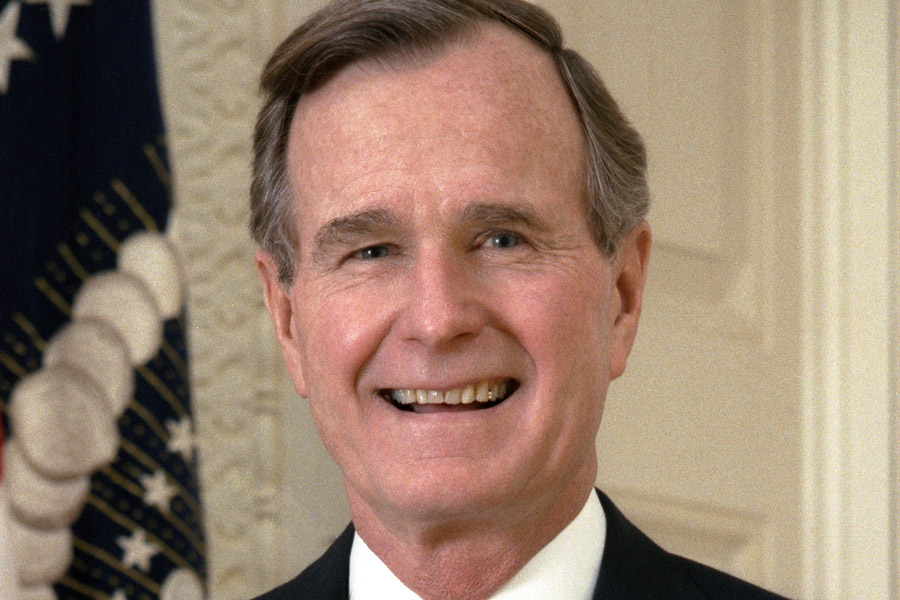
I see George Bush Sr. growing up with duty, discipline, and family expectations. George Herbert Walker Bush was born in Milton, Massachusetts, on June 12, 1924. His family considered public service a family language, not a vocation. His family moved to Greenwich, Connecticut, soon after his birth, where he grew up.
His public image was not glamorous despite his privilege. It relied on stability. His father, Connecticut senator Prescott Sheldon Bush, was a businessman and politician. Dorothy Walker Bush, his mother, was disciplined and socially responsible from the Walker family. I think their home had quiet but weighty expectations, like furniture that never moved.
Bush attended Phillips Academy and became an adult when history required rapid decisions. On June 12, 1942, his 18th birthday, he joined the U.S. Navy. One of the youngest aviators in the army, he flew 58 combat flights during World War II. A furnace. He was tested early and gained a strong public persona.
Love, Marriage, and the Center of His Private World
Before the major offices and world events, Barbara Pierce. He met her at a Greenwich Christmas dance in 1941, and their love shaped modern presidential history. They married in Rye, New York, on January 6, 1945, starting a 73-year partnership.
I can’t talk about George Bush Sr. without Barbara Bush. Not just the president’s wife or ceremonial First Lady. As his anchor, witness, and equal partner, she lived a family life partially in public and partly behind handwritten messages, intimate jokes, and intense loyalty. Their marriage became a Bush family hallmark.
Their alliance survived war, political setbacks, successes, illness, bereavement, and aging. The warmth they exuded tempered power’s jagged edges. Barbara was the family’s core, while George Bush Sr. traveled through public life like a sailor who knew where home was.
The Bush Family Tree and the People Closest to Him
George Bush Sr was part of a large and influential family network, and those relationships help explain both the man and the legacy he left behind.
His father, Prescott Sheldon Bush, gave him an example of political ambition tied to public duty. Prescott was active in finance and national politics, and his career helped place the Bush family among the most visible American dynasties of the 20th century.
His mother, Dorothy Walker Bush, was a powerful force in the household. From what is known about her, I see someone who helped shape the family’s emotional code: resilience, expectation, loyalty, and composure.
He had siblings who shaped his early existence. His siblings Nancy Bush, Prescott Bush Jr., Jonathan Bush, and William Bush were from a prominent family. Though less well-known than George Bush Sr., they shaped him.
Children and the Next Generation of the Bush Legacy
George and Barbara Bush had six children, and their family story includes both extraordinary achievement and profound sorrow.
Their four-year-old daughter Pauline Robinson “Robin” Bush died of leukemia in 1953. The family was forever changed by that loss. Still decades later, Robin’s death was a major emotional event in the Bush family. Grief ran through the house like a quiet river, sometimes unnoticed but always there.
Their eldest son, George W. Bush, later became the 43rd president of the United States. This made the Bushes one of the rare father-son presidential pairs in American history. George W. Bush carried the family name into another era, though in a distinctly different style.
Another son, Jeb Bush, became governor of Florida and later sought the presidency. He built a major political identity of his own, especially in education and conservative policy circles.
Neil Bush did things differently, becoming a businessman and public figure with international and philanthropic interests. Marvin Bush made his mark on business and corporate leadership. Their daughter Dorothy “Doro” Bush Koch was noted for literature, philanthropy, and family history preservation.
When I look at the Bush children as a group, I see a family that extended its reach across politics, business, philanthropy, and public memory. The family was not just prominent. It became almost institutional.
From Texas Oilman to National Figure
Bush attended Yale after WWII and graduated in 1948. He then worked in oil in Texas. This essential period anchored him in a distinct America, far from his boyhood New England. He established his business and political credentials in Texas.
He helped build successful oil ventures and established himself as a serious figure in Midland and Houston. To me, this period feels like the bridge between inheritance and self-creation. He was still a Bush, but he was no longer only the son of Prescott Bush. He was making his own weather.
His move into politics followed. He served in the U.S. House of Representatives from Texas from 1967 to 1971. That was only the beginning.
A Career of Rare Breadth in Public Service
Few American presidents arrived in the White House with a resume as broad as George Bush Sr’s. His public service career unfolded in stages, each one adding another layer to his reputation.
He was U.S. UN ambassador from 1971 to 1973. He chaired the Republican National Committee from 1973 to 1974, a turbulent time in politics. He then became top U.S. liaison to China in 1974 and 1975, obtaining experience in one of the most sensitive diplomatic areas.
He led the CIA under heavy scrutiny as Director of Central Intelligence in 1976. He was Reagan’s vice president from 1981 until 1989. Before becoming president in 1988 and taking office in 1989, he had mastered every tool on the bench.
President George Bush Sr and the Weight of History
George Bush Sr served as the 41st president of the United States from 1989 to 1993. His presidency came at a hinge point in world history. The Cold War was ending, the Soviet bloc was collapsing, and the global order was being redrawn in real time.
I picture his administration as calm leadership. He oversaw the peaceful end of the Cold War and supported German reunification, a major event in modern Europe. The 1989 U.S. invasion of Panama and the 1991 Gulf War coalition response to Iraq’s invasion of Kuwait were under his command.
His domestic record was more significant than many realize. He signed the landmark Americans with Disabilities Act in 1990, changing public life for millions. He also signed the 1990 Immigration Act and important Clean Air Act changes that year. These were big measures. They were structural changes meant to stay.
His presidency also included major judicial appointments, including David Souter and Clarence Thomas to the Supreme Court. Even those who debate his politics often acknowledge the scale of the historical moment he navigated.
Personal Character and Public Style
Despite his formality, George Bush Sr. was noted for handwritten letters, emotional loyalty, and intimate relationships. This person had aristocratic manners and friendliness. His political firepower was limited. He preferred courtesy, coalition-building, and private persuasion.
That style could make him seem understated in a media culture that rewards spectacle. Yet understatement was part of his character. He seemed to believe that service mattered more than performance. In public life, he was often like a well-built bridge: not flashy, but carrying enormous weight.
Net Worth and Financial Background
George Bush Sr. was wealthy and became wealthy through business and public recognition, but his net worth is unknown. Many put his late-life riches at $23 million to $25 million.
That figure, while significant, tells only part of the story. His real inheritance was not merely financial. It was social capital, institutional reach, and a family name that opened doors while also carrying expectations.
Key Dates at a Glance
| Year | Event |
|---|---|
| 1924 | Born in Milton, Massachusetts |
| 1942 | Joined the U.S. Navy on his 18th birthday |
| 1945 | Married Barbara Pierce |
| 1948 | Graduated from Yale |
| 1953 | Daughter Robin died of leukemia |
| 1967 | Entered Congress |
| 1971 | Became U.N. ambassador |
| 1976 | Became CIA director |
| 1981 | Became vice president |
| 1989 | Became 41st president |
| 1990 | Signed ADA and major domestic legislation |
| 1991 | Led Gulf War coalition |
| 2018 | Died at age 94 |
George Bush Sr in Memory and Family Legacy
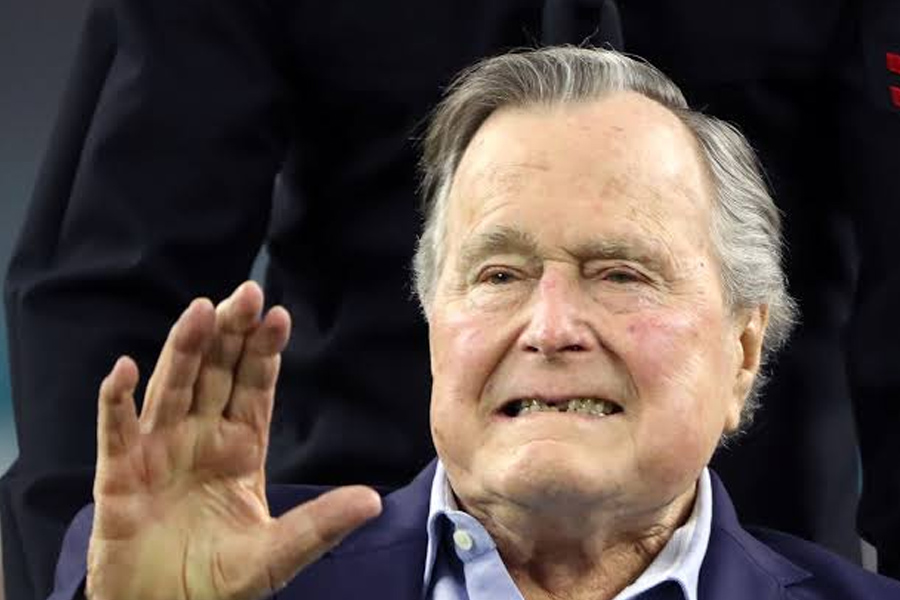
George Bush Sr.’s public image has been maintained through memorial ceremonies, family tributes, institutional programs, and the Bush family’s presence after his death on November 30, 2018. In April 2018, Barbara Bush died, ending one of the longest presidential marriages.
Wartime bravery, diplomatic expertise, presidential leadership, and family continuity are his legacy. People remember him not only for his post but also for his clan, his notes, his griefs, and his feeling that responsibility was nearly inherited.
FAQ
Who was George Bush Sr?
George Bush Sr, more formally George H. W. Bush or George Herbert Walker Bush, was the 41st president of the United States. He also served as a congressman, U.N. ambassador, head of the Republican National Committee, chief U.S. liaison to China, CIA director, and vice president.
Who was George Bush Sr’s wife?
His wife was Barbara Bush, born Barbara Pierce. They married on January 6, 1945, and remained married for 73 years.
How many children did George and Barbara Bush have?
They had six children: George W. Bush, Robin Bush, Jeb Bush, Neil Bush, Marvin Bush, and Dorothy Bush Koch.
Which of his children became especially well known?
George W. Bush became the 43rd president of the United States, and Jeb Bush became governor of Florida and a national political figure. Dorothy Bush Koch also became known through philanthropy and writing.
What happened to Robin Bush?
Robin Bush, their daughter Pauline Robinson Bush, died of leukemia in 1953 when she was four years old. Her death remained one of the deepest sorrows in the Bush family.
What were George Bush Sr’s biggest presidential achievements?
His major achievements included helping manage the end of the Cold War, supporting German reunification, leading the coalition in the Gulf War, signing the Americans with Disabilities Act, approving major clean air reforms, and signing the Immigration Act of 1990.
What was George Bush Sr like personally?
He was widely seen as disciplined, courteous, loyal, and deeply family-oriented. He was also known for handwritten letters, emotional warmth, and a strong sense of duty.
What was George Bush Sr’s net worth?
Public estimates often placed his net worth at roughly $23 million to $25 million late in life, though no single definitive audited public figure fully captures his finances.