Introduction to George N Martin
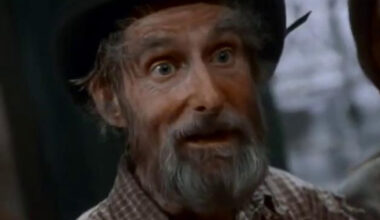
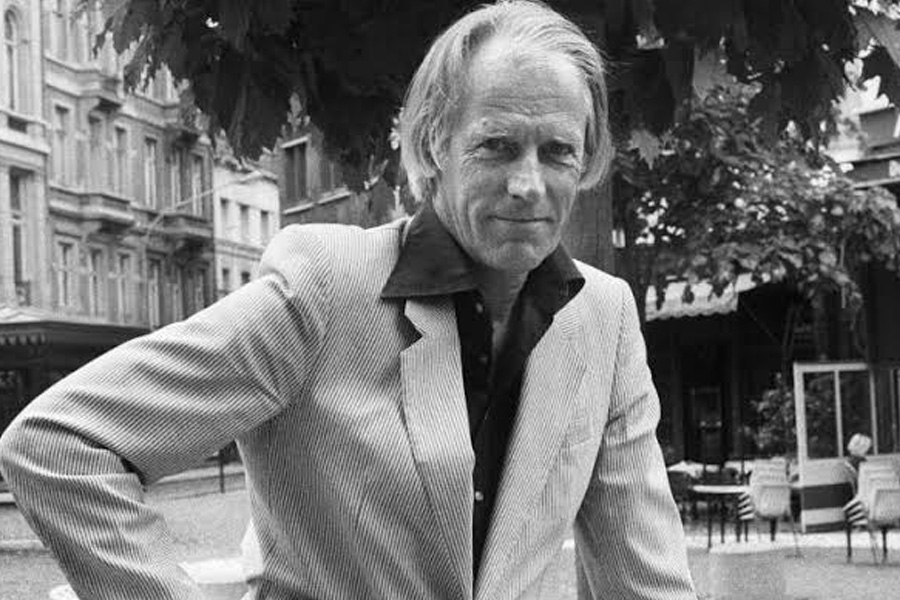
George N Martin was an American stage, film, and television actor whose career reflected the dedication and versatility of a seasoned character performer. Born on August 15, 1929, in New York City, he worked across several areas of the entertainment industry, building a professional life that included Broadway productions, regional theater, television dramas, and notable Hollywood films.
His full birth name was Nathan Barnert George Martin. Although he rarely occupied the spotlight reserved for leading stars, his performances contributed to numerous productions that audiences continued to appreciate long after their original releases. His screen credits included Dead Poets Society, Awakenings, and Léon The Professional. On Broadway, his work earned him a Tony Award nomination, an achievement that reflected his standing as a respected stage actor.
Martin also maintained a significant connection to Providence, Rhode Island, where he became a longtime member of Trinity Repertory Company. His professional accomplishments are relatively well documented, but his private life remains less familiar. His marriage to actress Katherine Helmond, his later family relationships, and his military service provide important glimpses into the man behind the performances.
Early Life and Background
George N. Martin was born in NYC on August 15, 1929. Few details regarding his childhood, schooling, and family exist. Nathan Barnert George Martin, his birth name, has been linked to the industrial and philanthropic Barnert family of New Jersey. The exact nature of any genealogical tie is not clear from widely known biographical biographies.
This uncertainty shows how working actors’ personal histories can be concealed. Recordings and production archives preserve their performances, but early information may be lacking.
Martin also served in the military. He was a Korean War combat veteran before his acting career. His service is crucial to his biography, yet few public reports of his military duties and experiences exist.
Martin valued character roles over notoriety by the time he established himself in theater and movies. His work showed how consistency, preparation, and story support might help an actor create a career.
Marriage to Katherine Helmond
One of the most recognizable chapters in George N Martin’s personal history was his marriage to Katherine Helmond, the American actress who later became a familiar television presence to millions of viewers.
Helmond was born on July 5, 1929, in Galveston, Texas. She became widely known for her performances in television comedies, particularly Soap and Who’s the Boss? Her career also included theater, film, and occasional directing work.
Martin and Helmond married in New York in either 1957 or 1959, depending on the account. Their marriage ended in divorce in 1962. No children were born from their relationship.
Their marriage occurred before Helmond achieved her greatest television success. At the time, both were involved in the demanding world of acting, where professional opportunities often required travel, irregular schedules, and sustained commitment to performance.
Although their relationship was relatively brief, it remains a notable connection between two performers who pursued careers across stage and screen. Martin later became associated with theater in Rhode Island, while Helmond went on to establish herself as a celebrated television actress.
Little public information survives about the private circumstances of their marriage or divorce. It would therefore be misleading to assign particular reasons to their separation. What is clear is that they eventually followed separate paths, with each continuing a career in the performing arts.
Katherine Helmond’s Family Background
Understanding Helmond’s background adds context to her early life and her eventual marriage to Martin.
She was born into an Irish Catholic family. Her father, Patrick Joseph Helmond, also identified in some records as Joseph P. Helmond, worked as a laborer before serving as a firefighter with the Galveston Fire Department. Her mother, Thelma Louise Walker Helmond, came from Paducah, Kentucky, and primarily managed the household.
Helmond’s parents divorced when she was young. She was raised largely by her mother and maternal grandmother, Maude Stella Walker, in a multigenerational household. The family experienced financial difficulties, and Helmond later recalled having responsibilities from an early age.
She attended Ursuline Academy and Ball High School in Galveston. School performances helped introduce her to acting, while her backstage work gave her practical experience with theater production. She later performed with local theater groups and briefly attended Bob Jones University, where she appeared in the film Wine of Morning in 1955.
Helmond had a younger sister, Jo Ann, who died in infancy. She also had a half-sister, Alice Parry, following her mother’s remarriage. These family experiences formed part of her background before she became a nationally recognized performer.
Katherine Helmond’s Second Marriage and Later Life
After her divorce from Martin, Helmond eventually established a long-lasting partnership with David Richard Christian, a sculptor, artist, and set designer.
The two met in 1962 at the Hampton Playhouse summer stock theater in New Hampshire. Helmond was performing, while Christian was working as an assistant set designer. Their relationship developed over several years, and they married in New York in 1969.
Their marriage lasted until Helmond’s death in 2019, creating a partnership of approximately 50 years as a married couple and 57 years from their first meeting. Christian later described her as the love of his life and spoke warmly about their years together.
The couple shared an interest in Zen Buddhism and maintained homes in several locations, including Los Angeles, New York City, Long Island, and London. Helmond had been raised Catholic but later explored Zen Buddhist practice.
Neither Helmond nor Christian had children. Their relationship became a defining part of her adult personal life, extending across the decades in which she established her best-known television roles.
Helmond died on February 23, 2019, at her home in Los Angeles, aged 89. Her death was attributed to complications from Alzheimer’s disease. Her husband and colleagues remembered her for her humor, warmth, and professional dedication.
George N Martin’s Children and Family Relationships
Unlike Helmond, George N Martin had two sons from a later relationship. His surviving children were identified as Jeremy Martin and David Martin, both associated with Rhode Island.
Public biographical information about the two sons is limited. Their mother’s identity and the details of Martin’s later relationship or marriage have not been widely established in accessible accounts. Information about his siblings and other extended family members is similarly scarce.
The limited documentation makes it difficult to reconstruct Martin’s family life beyond the facts recorded in his death notice. It also highlights the distinction between a public career and a private household. An actor may spend decades appearing before audiences while keeping personal relationships away from public attention.
Martin’s connection to Rhode Island appears to have been important in both his professional and personal life. His long association with Trinity Repertory Company placed him within a regional theater community, and his surviving sons were also identified with the state.
The available information does not establish the extent of his relationships with his sons or describe their individual careers. I consider it important to distinguish these documented family details from speculation, particularly when discussing relatives who maintained private lives.
George N Martin’s Career in Regional Theater
Theater defined Martin’s career. He performed in roughly 50 Trinity Repertory Company plays in Providence, Rhode Island, between 1969 and 1982.
This collaboration went beyond individual performances. Regional repertory theater actors must adapt to different directors, change roles, and provide new dimensions to familiar material. Martin became part of a creative institution with his regular appearances.
A Christmas Carol’s Ebenezer Scrooge was one of his signature roles. The character must be convincingly transformed from a miserly, reclusive man to someone generous and emotionally renewed. Martin performed Scrooge twice, contributing to one of holiday theater’s most memorable figures.
Trinity Rep productions were directed by him. He directed Bus Stop, A Flea in Her Ear, and Cat on a Hot Tin Roof. These initiatives show his theater contributions beyond acting. He considered tempo, staging, group dynamics, and production organization when directing.
Regional theater rarely garners the same attention as major film releases, but it can give an actor a creative home. Martin’s Trinity Rep years reflect a career of collaboration and theatrical duties.
Broadway Career and Tony Award Recognition
Martin also appeared on Broadway, where his work brought him recognition beyond the regional theater community.
His most prominent Broadway distinction came in 1983, when he received a Tony Award nomination for Best Featured Actor in a Play for his performance as Leonard Darwin in David Hare’s Plenty.
The nomination marked an important achievement in a career that had encompassed many supporting roles. Broadway’s competitive environment places actors in front of audiences and critics who closely examine performance, characterization, and dramatic technique. Recognition at the Tony Awards indicated that Martin’s work had made a notable impression.
His theatrical credits included a range of established plays and productions. Among them were Dracula, in which he played Abraham Van Helsing; The Mystery of Edwin Drood; M. Butterfly; The Crucible, in which he portrayed Giles Corey; On the Waterfront; Racing Demon; Pack of Lies; and Heartbreak House, in which he played Boss Mangan.
These productions demanded different acting approaches. Some required the controlled intensity of serious drama, while others involved suspense, historical settings, or the stylized rhythms of theatrical comedy.
Martin’s ability to work across such varied material helped define his reputation. His Tony nomination remains one of the clearest markers of his professional standing.
Film Career and Memorable Screen Appearances
Martin moved between theater, film, and television, frequently playing professionals, authority figures, and supporting characters who helped establish the atmosphere of a story.
His film credits included several widely recognized titles released during the 1980s and 1990s.
| Year | Film | Role or contribution |
|---|---|---|
| 1984 | Falling in Love | Supporting role |
| 1985 | The Purple Rose of Cairo | Supporting role |
| 1988 | Crossing Delancey | Supporting role |
| 1988 | Rocket Gibraltar | Supporting role |
| 1989 | Dead Poets Society | Dr. Hager |
| 1990 | Awakenings | Frank |
| 1993 | Dave | Supporting role |
| 1993 | The Man Without a Face | Supporting role |
| 1994 | Léon The Professional | Hotel receptionist |
| 1994 | Quiz Show | Supporting role |
| 1996 | The Associate | Supporting role |
| 1996 | One Fine Day | Supporting role |
| 1999 | Outside Providence | Supporting role |
Dead Poets Society explored education, conformity, and individual expression, and he appeared in it. The drama Awakenings followed patients who temporarily recovered from experimental treatment.
Martin starred in the 1994 crime thriller Léon The Professional with Jean Reno, Natalie Portman, and Gary Oldman. Despite his modest appearance as a hotel receptionist, the film’s ongoing appeal has introduced its supporting characters to new audiences.
He appeared in Quiz Show, a historical drama about the 1950s TV quiz show scandal. In addition to Dead Poets Society and Awakenings, it connected Martin to three Best Picture nominees.
These appearances demonstrate character acting. A credible supporting actor may have little screen time, but it helps a film feel like its characters are real rather than the major characters’ servants.
Television Work and Guest Appearances
Television provided Martin with another consistent stream of acting opportunities. His credits included appearances in the Law & Order franchise, including Law & Order, Law & Order Special Victims Unit, and Law & Order Criminal Intent.
The franchise was particularly well suited to experienced character actors. Its procedural format regularly introduced judges, doctors, attorneys, witnesses, officials, and other figures who needed to feel credible within a short period.
Martin’s television work also included The Six Million Dollar Man and various television films and miniseries. One historical production associated with his credits was The Royal Romance of Charles and Diana, in which he played Earl Spencer. He also appeared in The Scarlet Letter.
His television career extended from guest roles to parts in longer productions. Although he was not generally the central attraction, his presence helped sustain the realism and variety that episodic storytelling requires.
His screen career reached its most visible period from the mid-1980s through the late 1990s. Later credits, including Outside Providence and appearances in Law & Order Criminal Intent, extended his working life toward the early 2000s.
Military Service and Personal Character
Martin’s service as a Korean War combat veteran is an important part of his biography, although the available public record offers few details about his time in the military.
The Korean War lasted from 1950 to 1953, a period during which many young Americans entered military service. Martin’s documented veteran status places part of his early adulthood within that historical context.
It would be difficult to draw conclusions about how his service influenced his acting without personal testimony or more detailed records. Nevertheless, military service forms a significant biographical fact alongside his theater training and subsequent professional achievements.
His career also suggests an appreciation for the ensemble nature of performance. Nearly 50 Trinity Rep productions, a Tony nomination, and decades of supporting film and television work reflect a willingness to take on varied assignments rather than depend on one signature role.
Martin’s public profile remained comparatively modest. He was not widely associated with interviews about his private life, celebrity controversies, or public displays of wealth. The available record instead emphasizes his acting, directing, military service, and connection to Rhode Island theater.
Net Worth and Financial Status
There is no reliably established public figure for George N Martin’s net worth at the time of his death in 2010.
His professional history included Broadway productions, film roles, television appearances, and extensive regional theater work. These activities provided employment across several decades, but individual earnings, property holdings, investments, and estate details have not been comprehensively documented in widely available public accounts.
It would therefore be misleading to assign him a specific fortune based on the size of his filmography or the commercial success of productions in which he appeared.
Character actors often work across multiple productions without receiving the salaries associated with major stars. Their careers can be long and professionally rewarding while remaining outside the financial reporting and celebrity coverage that accompany leading performers.
Martin’s legacy is best understood through the documented range of his work rather than an unsupported estimate of his personal wealth.
Death and Lasting Recognition
Providence, Rhode Island, lost George N. Martin on June 1, 2010. His age was 80. Public notice of his death did not state a cause.
His obituary noted his longtime association with Trinity Repertory Company, his Broadway Tony nomination, his film roles, his Korean War duty, and his two sons, Jeremy and David Martin.
His death was noted during the 2010 Tony Awards broadcast, joining other Broadway veterans.
For fans of Dead Poets Society, Awakenings, and Léon The Professional, Martin is part of a group of actors that gave huge pictures substance. Through his dedication to Trinity Rep, his stage work enhances that history.
His career shows that top stars cannot tell the story of American acting. It also belongs to actors who switch between roles, assist each other, and keep stories consistent across mediums.
FAQ
Who was George N Martin?
George N Martin was an American stage, film, and television character actor born in New York City on August 15, 1929. His full birth name was Nathan Barnert George Martin. He was known for his extensive theater work, his Broadway appearances, and supporting roles in films including Dead Poets Society, Awakenings, and Léon The Professional.
What was George N Martin’s full birth name?
His full birth name was Nathan Barnert George Martin. Some accounts have associated the Barnert name with a prominent New Jersey industrialist and philanthropic family, but a direct ancestral connection has not been firmly established in widely available biographical information.
Was George N Martin married to Katherine Helmond?
Yes. Martin married Katherine Helmond in New York in either 1957 or 1959, with accounts differing on the precise year. They divorced in 1962 and had no children together.
Who was Katherine Helmond?
Katherine Helmond was an American actress born on July 5, 1929, in Galveston, Texas. She became famous for playing Jessica Tate in Soap and Mona Robinson in Who’s the Boss? Her career also included theater, films such as Brazil, and voice work in the Cars franchise.
Did George N Martin have children?
Yes. Martin was survived by two sons, Jeremy Martin and David Martin, who were associated with Rhode Island. Detailed information about their lives and their mother’s identity is not widely available in public biographical accounts.
Who was Katherine Helmond’s second husband?
Helmond married David Richard Christian, a sculptor, artist, and set designer, in 1969. They first met in 1962 and remained together until her death in 2019. They did not have children.
What was George N Martin’s most important theater achievement?
One of Martin’s most significant theater achievements was his 1983 Tony Award nomination for Best Featured Actor in a Play for playing Leonard Darwin in David Hare’s Plenty. He was also a longtime member of Trinity Repertory Company in Providence, where he appeared in nearly 50 productions.
Which movies featured George N Martin?
His film credits included Falling in Love, The Purple Rose of Cairo, Crossing Delancey, Dead Poets Society, Awakenings, Dave, The Man Without a Face, Léon The Professional, Quiz Show, The Associate, One Fine Day, and Outside Providence.
Did George N Martin serve in the military?
Yes. Martin was a combat veteran of the Korean War. Detailed public information about his military assignments and experiences is limited.
When did George N Martin die?
Martin died on June 1, 2010, in Providence, Rhode Island, at the age of 80. His cause of death was not disclosed in the public death notice.
What was George N Martin’s net worth?
His net worth has not been reliably documented in public sources. Although he worked for decades in theater, film, and television, there is insufficient verified financial information to establish a specific figure.
What is George N Martin remembered for today?
Martin is remembered for his Tony-nominated Broadway performance, his long association with Trinity Repertory Company, his supporting film and television roles, and his contribution to American character acting. His performances in several widely watched films have helped preserve his place in entertainment history, even though his private life remains relatively undocumented.